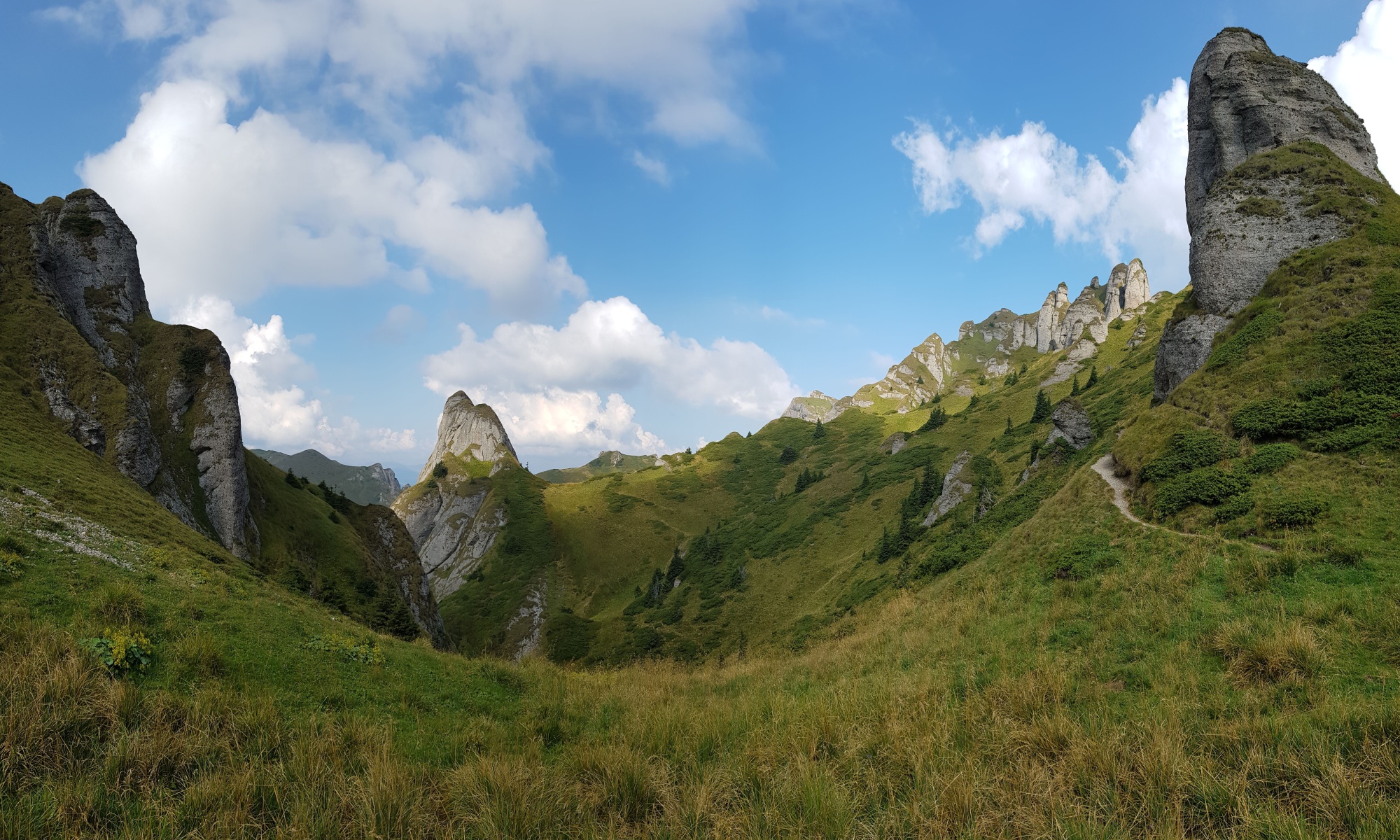
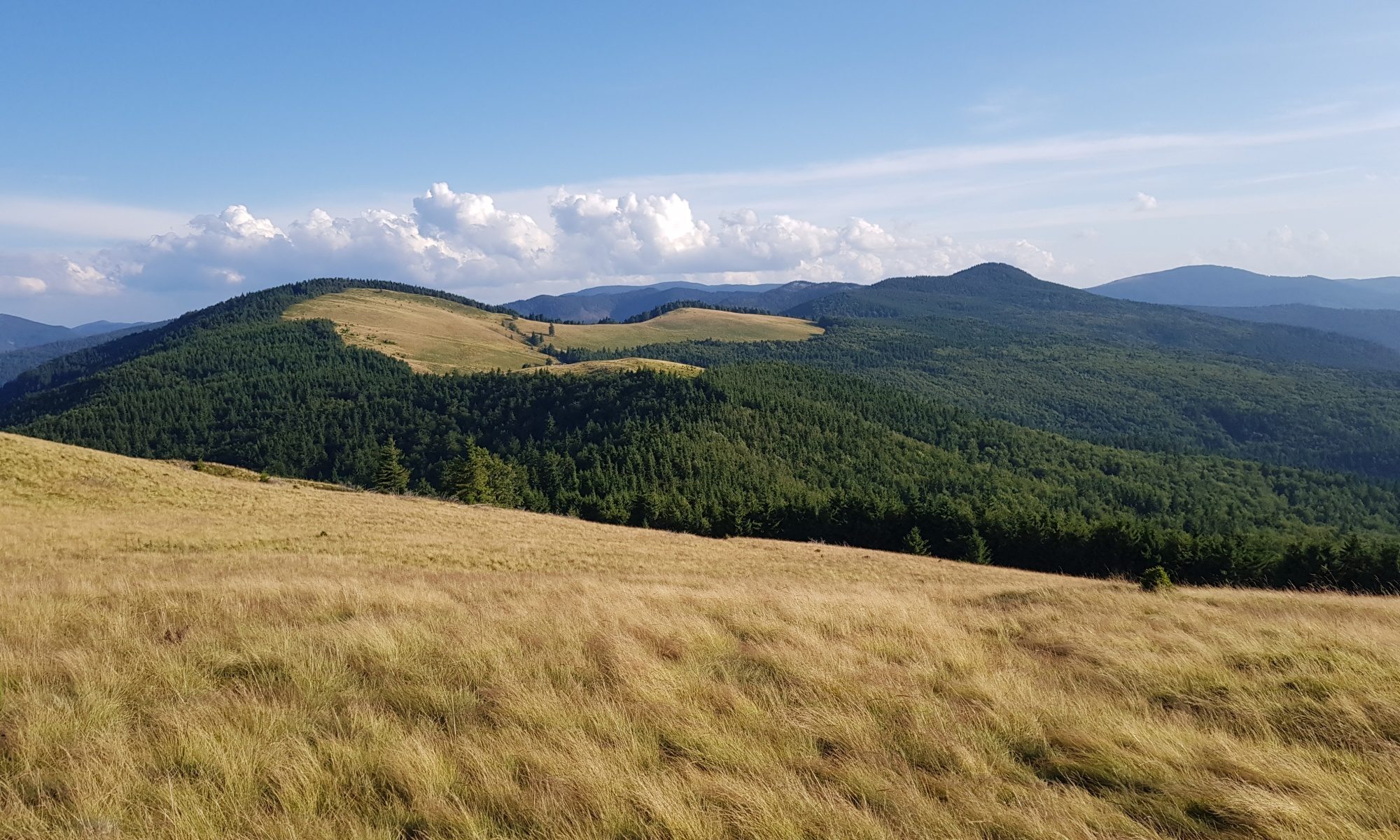
Lonely again
It was a somber morning on Monday, 29th July. We said goodbye to the refugiu and started descending toward Lunca de Jos, trying to avoid wild dogs. The path led through meadows with beautiful views, but once again, it ran along trenches—built by the Hungarians against the Red Army during WWII.
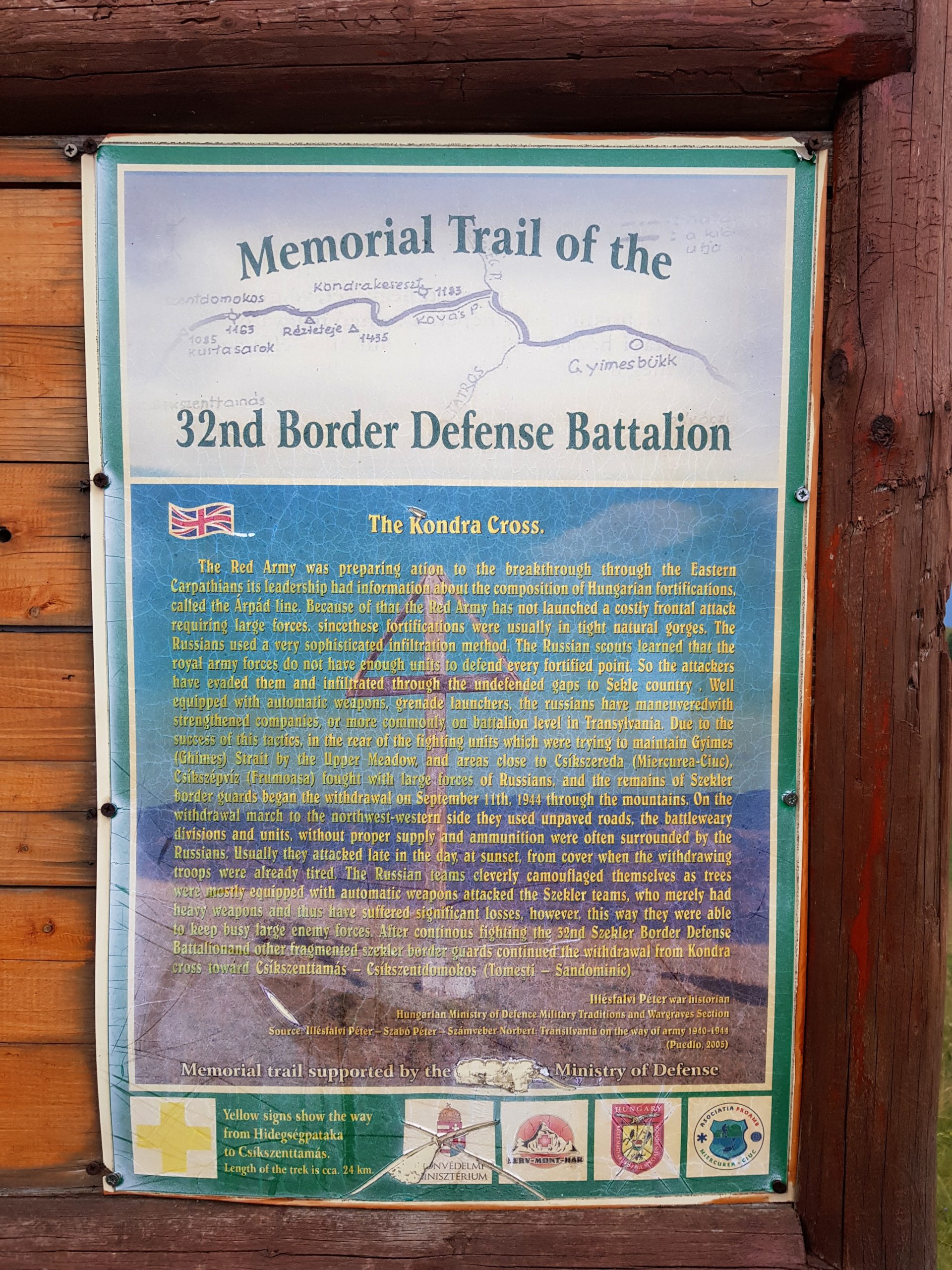
At one point, there was an interpretive panel about the 32nd Hungarian Infantry Battalion and their “heroic retreat” while being ambushed by the Russians (sic). This was not just the opinion of a local Hungarian; the panel had been financed by the Hungarian Ministry of Defence. No wonder its Romanian version had been destroyed a few metres away, leaving only the English one still mounted on the stand.
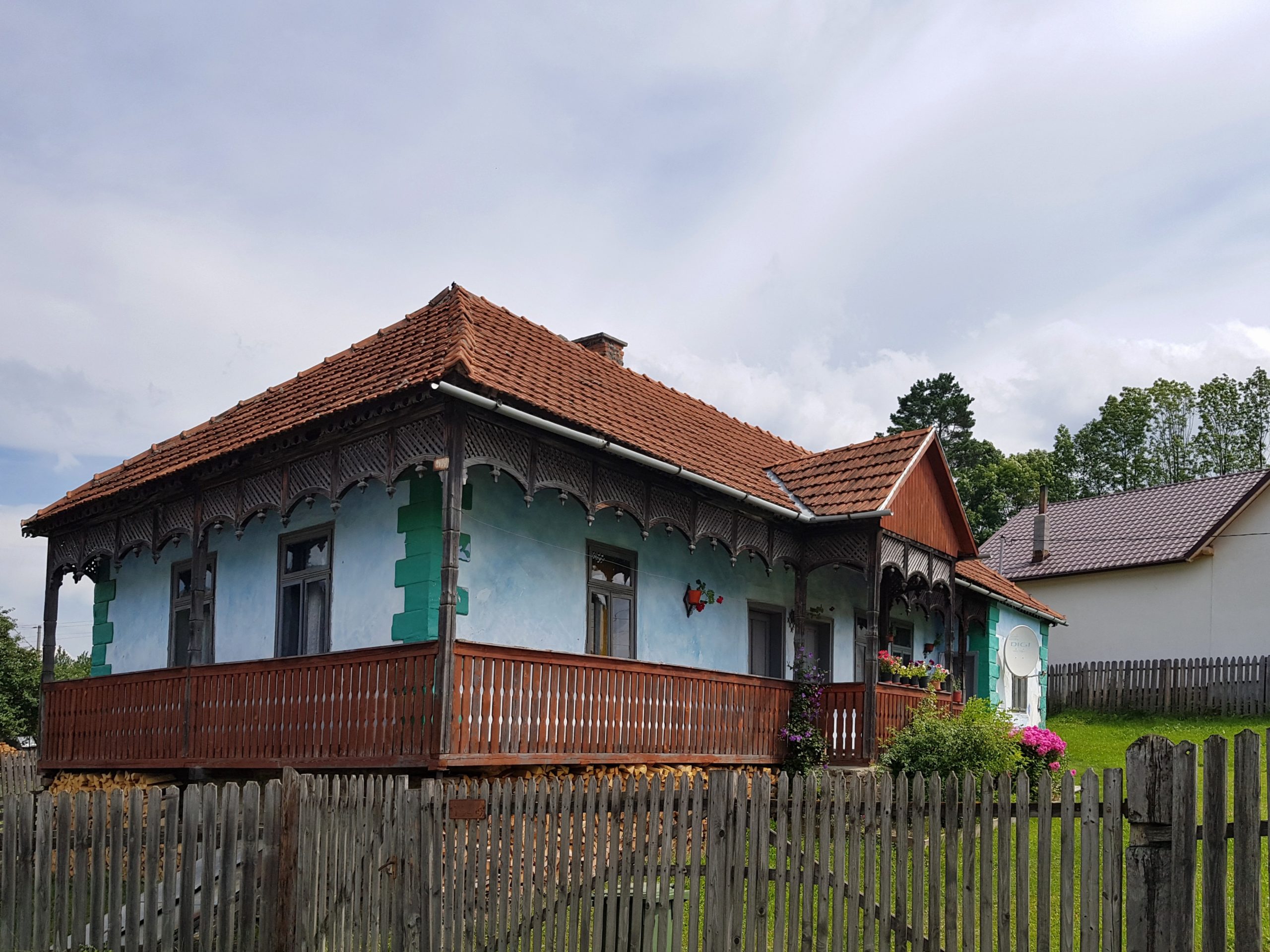
We ate our favourite breakfast in Lunca de Jos (sour cream, tomatoes, and bread) and continued to the neighbouring Lunca de Sus. What surprised me was that both villages have Hungarian-speaking partner towns exclusively in Hungary and Slovakia.
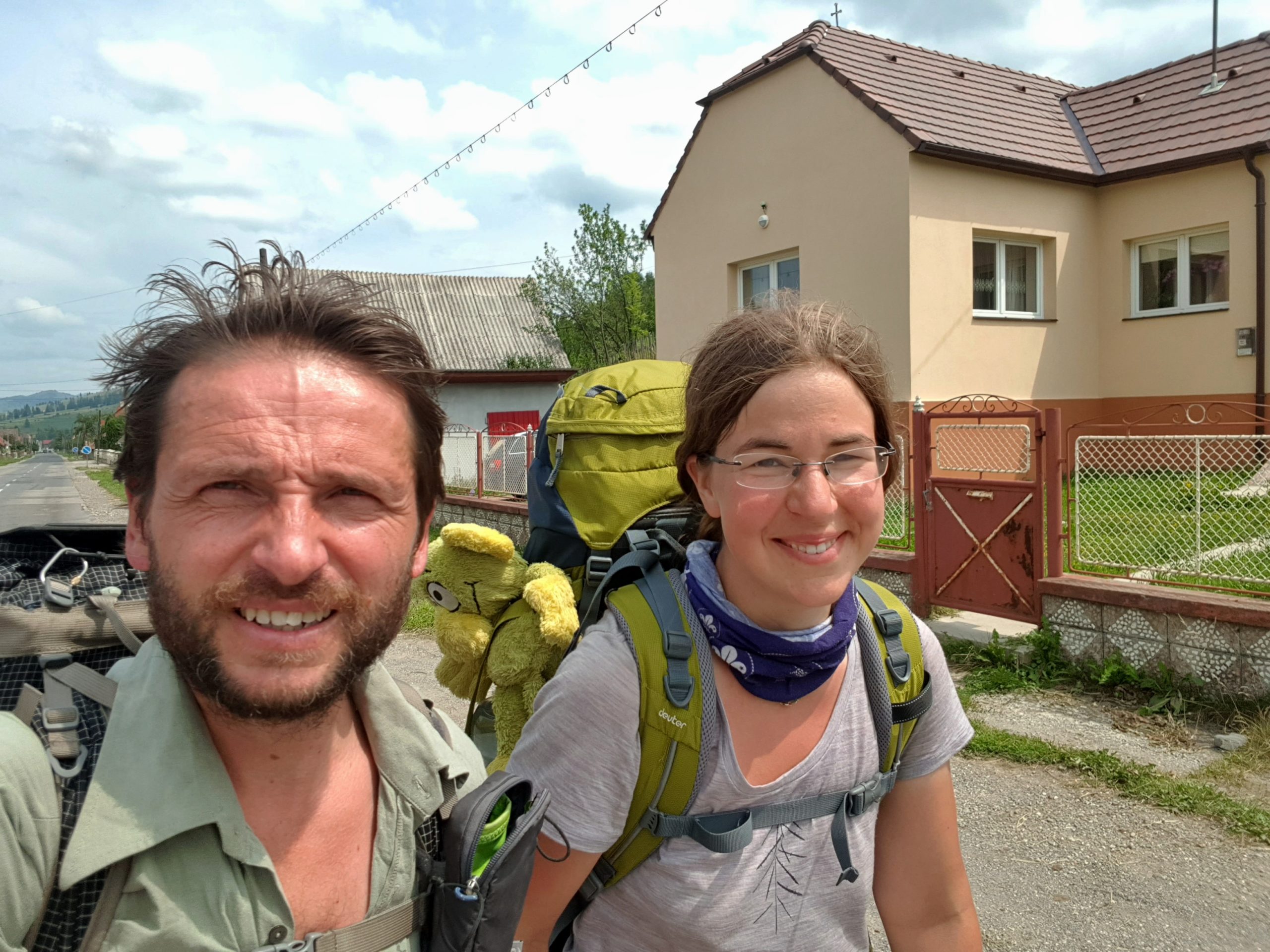
Paja walked with me for a few kilometres through the village to the point where I started ascending Munții Ciucului again. It was early afternoon, and Paja had plenty of time since her train wasn’t leaving until about 9 pm from Miercurea Ciuc, close to Lunca. For me, this was a heartbreaking farewell, as I knew that ahead of me lay the most difficult part of the entire journey: forested, sparsely populated mountain ranges where I was unlikely to meet another tourist and where the path might be difficult to find. It was 220 km to the Ciucaş Mountains, from where I would follow known trails. I had no idea how long it could take, especially given the less-than-optimistic weather forecast.
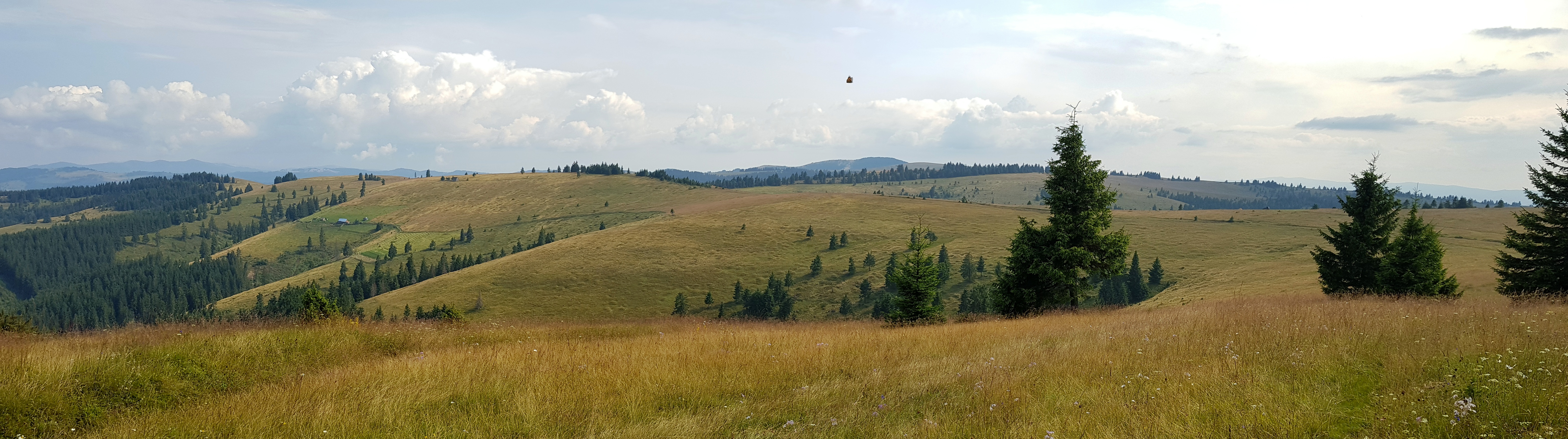
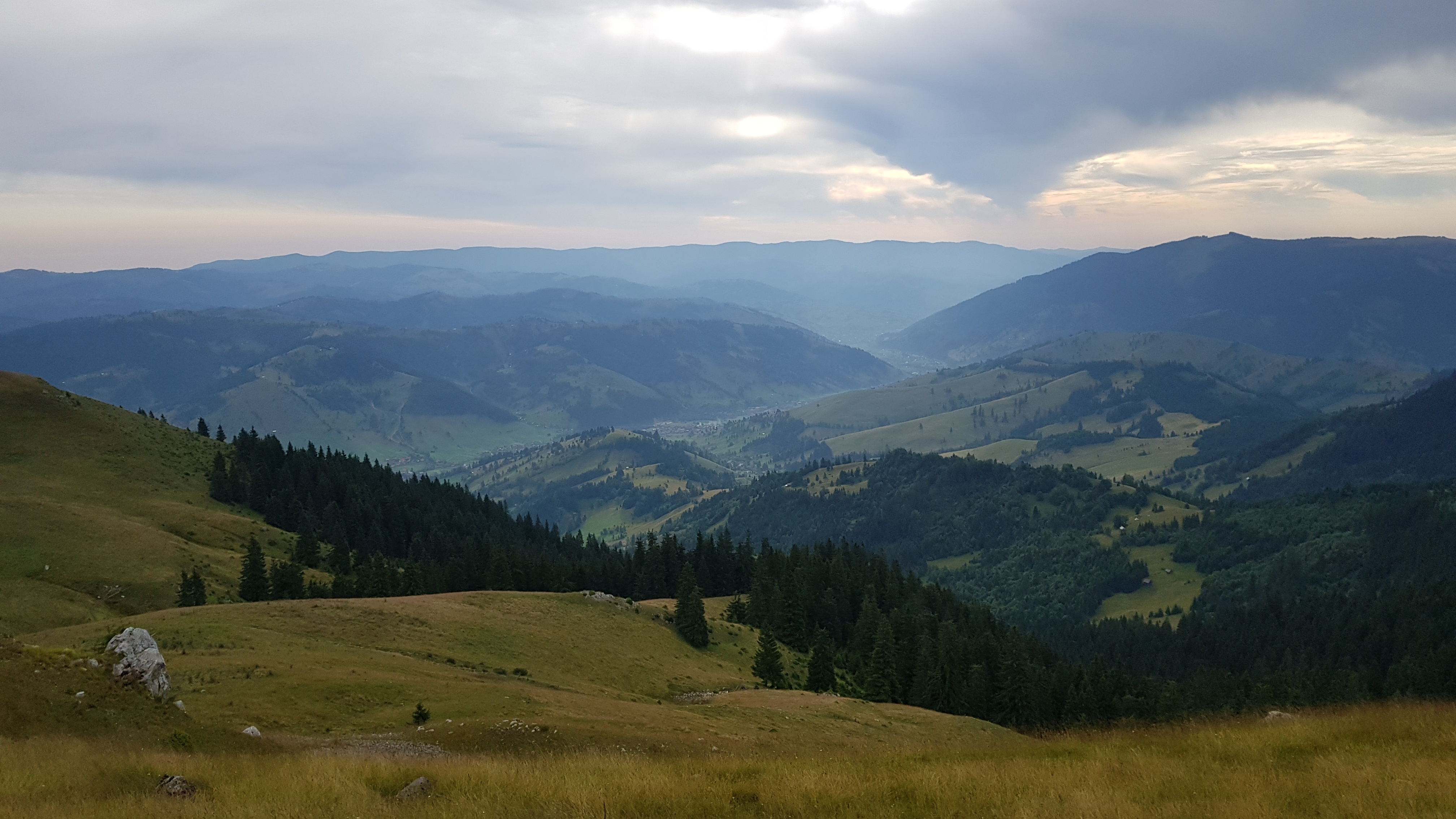
The southern part of Ciucului mountains was no less beautiful than the northern part. The shepherds’ houses in this area were located on the slopes amid flowering meadows. With their variety of livestock, they resembled summer farms rather than the typical shepherds’ shelters found in other areas.

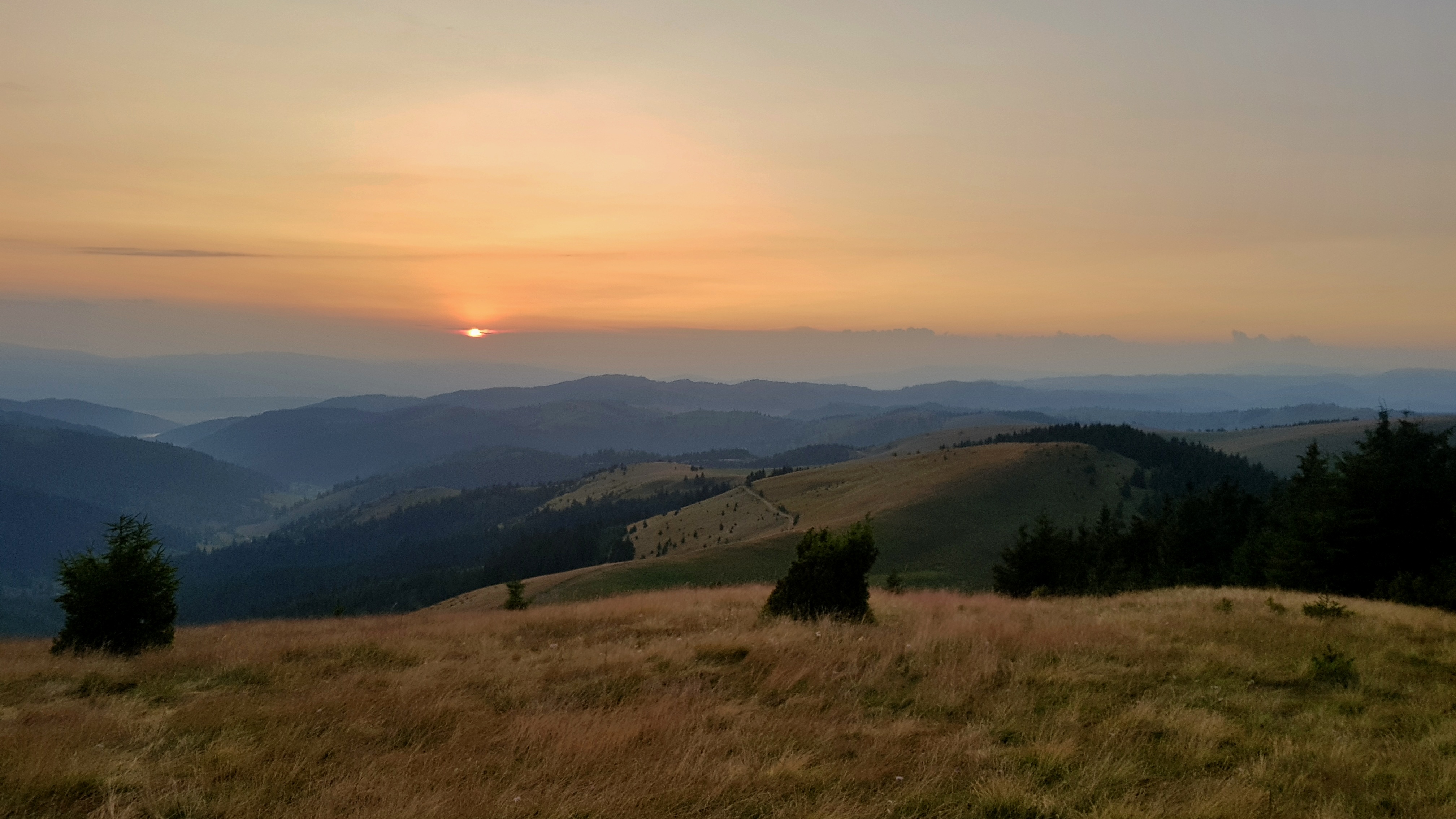
I somehow managed to avoid conflicts with dogs, washed my socks and shirt, withstood two rain showers and made it to the refugiu under Viscolul peak (1494). Since the shelter entrance faced west, a beautiful sunset promised that I might make it to Ciucaş.
Surprising Uz valley
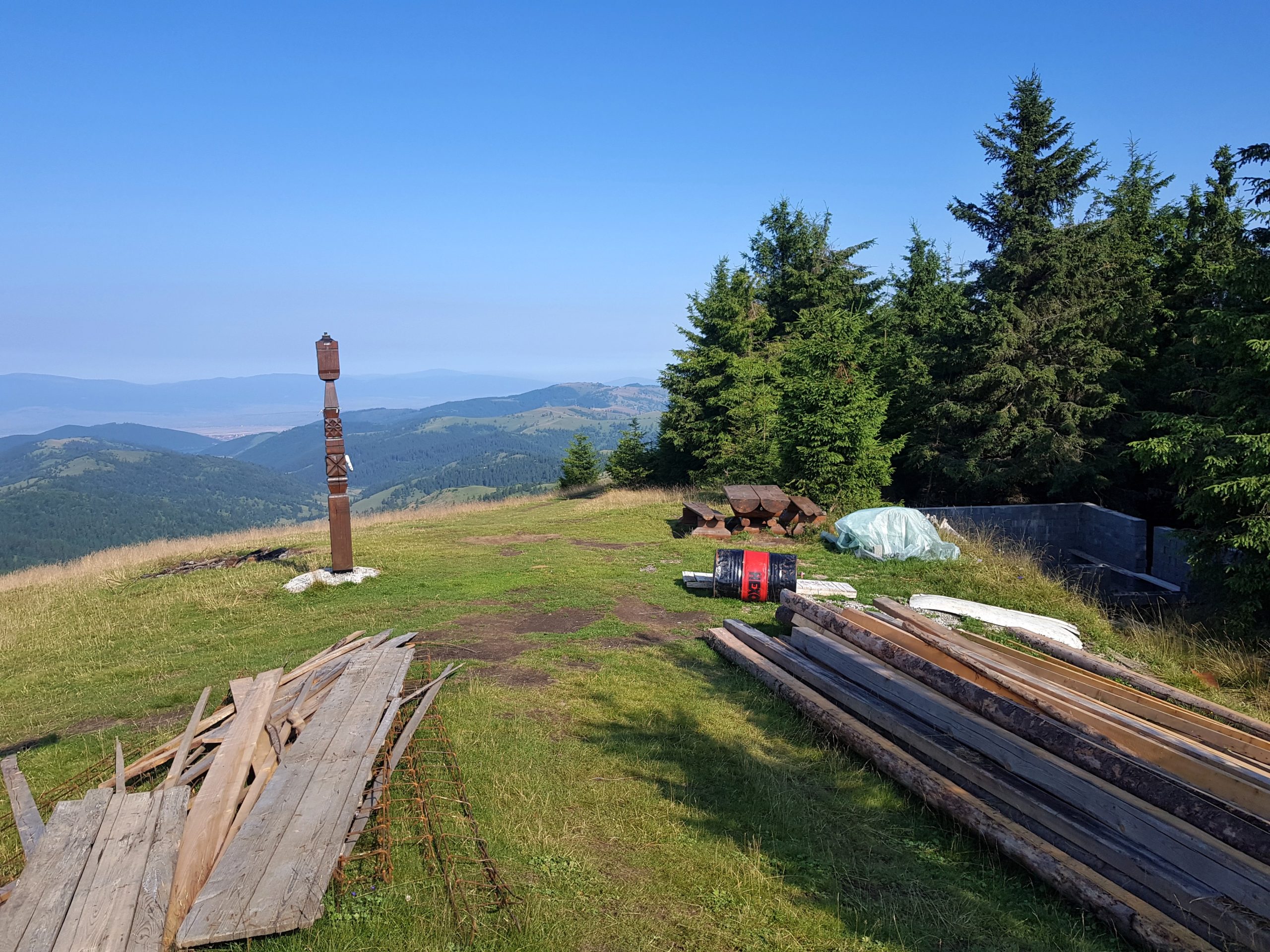
I got up early on Tuesday, 30th July as I knew this was a crucial day to cover as much ground as possible, given the rainy weather forecast from the next day onwards. Viscolul Peak apparently holds some significance for local Hungarians, as it was decorated and featured the concrete foundations for a future building.
I managed to avoid the dogs and washed in a river while charging my phone before reaching the village of Ciobăniş. I considered abandoning my planned route along the river to Ciobăniş to follow well-signed trails to the south instead, but this would have meant crossing from one ridge to another in an area poorly covered by my maps and far from civilisation. So, I stuck to my original plan instead, even though it meant going up and down through two valleys.
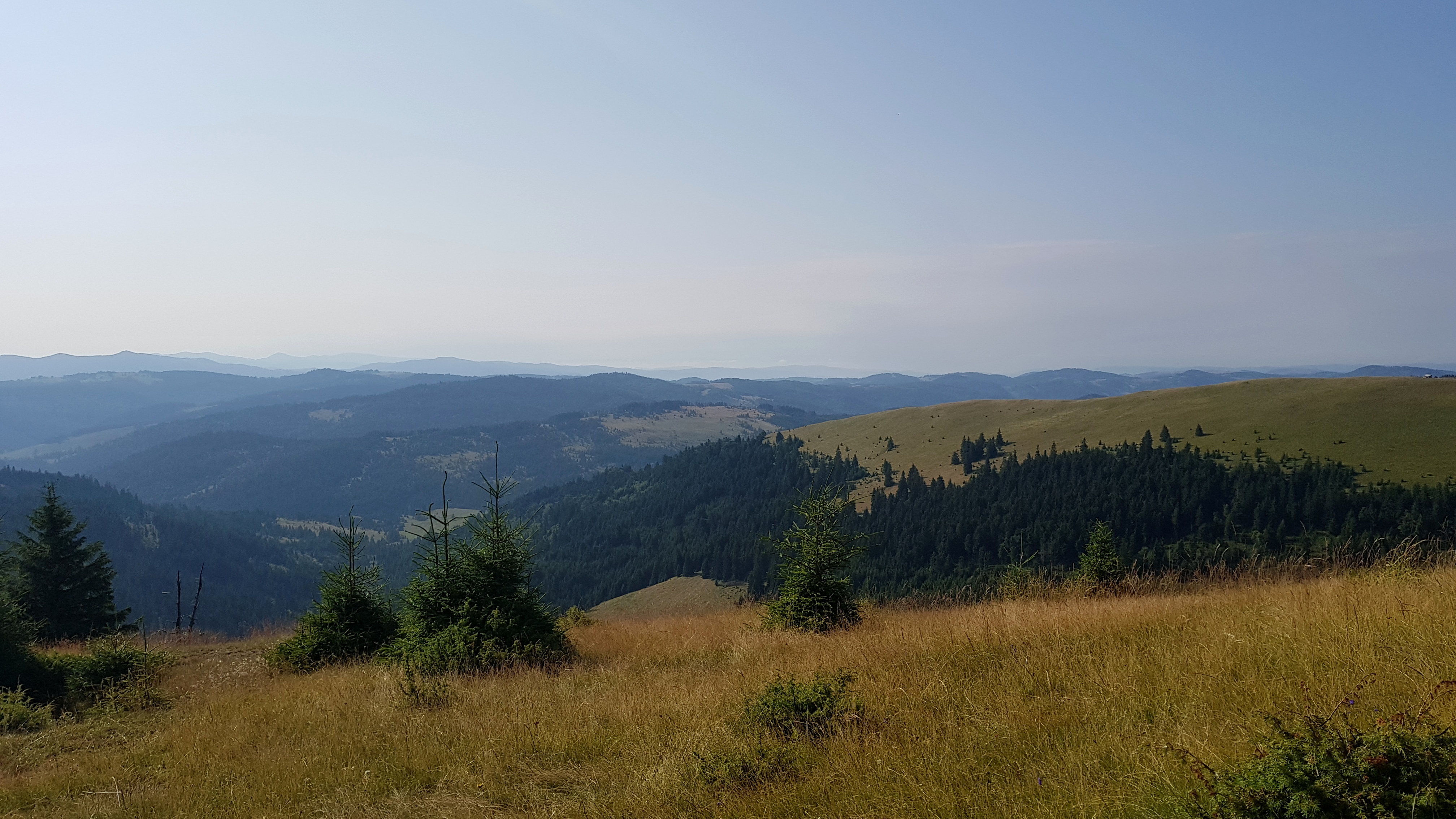
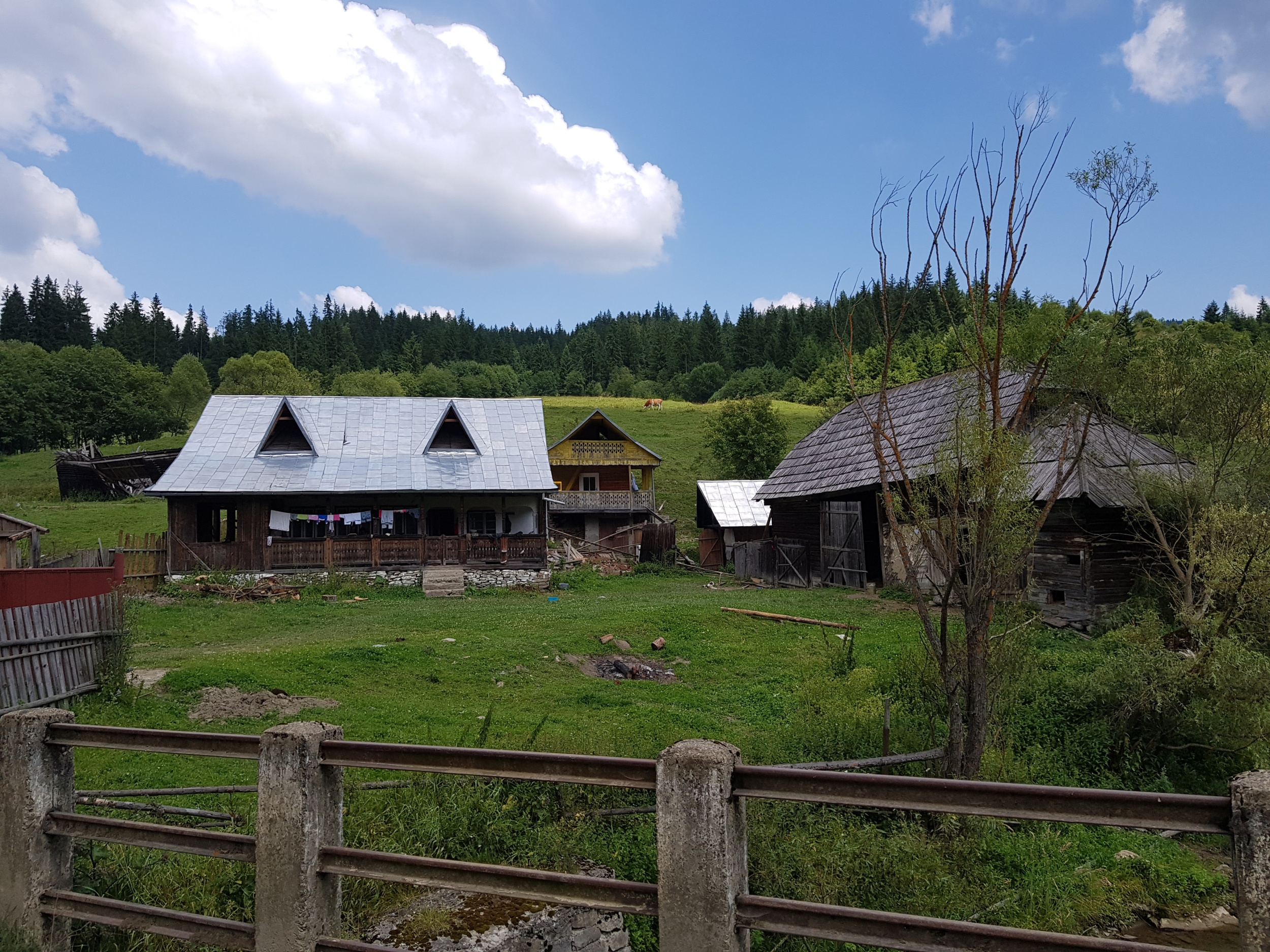
Ciobăniş is a village without electricity, far away from other settlements that transfers you back into the 19th century, no wonder Svetozár Krno and his fellows got similar impression of the place back in 1984. , which transports you straight back to the 19th century. No wonder Svetozár Krno and his companions got a similar impression of the place back in 1984. For the first time in Europe, I saw a woman preparing birch bark to make crafts, and I learnt more about a dog pack’s mentality during an unpleasant attack.
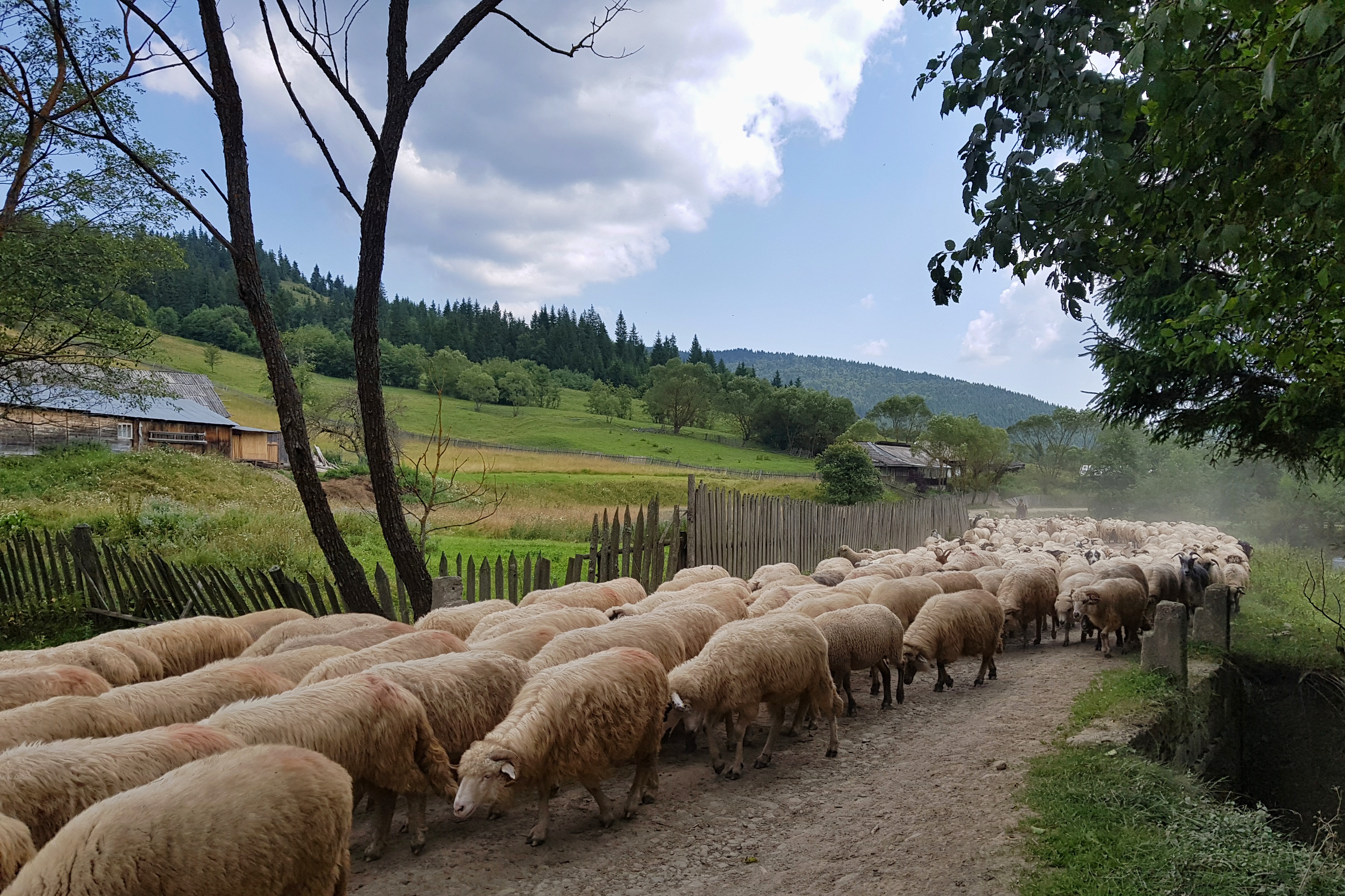
I lost the footpath in the pass between the valleys (during planning, I had simply assumed there would be a forest road through the pass, which, fortunately, there was). I was lucky that a thunderstorm passed nearby, and I only caught some moderate rain on its edge.
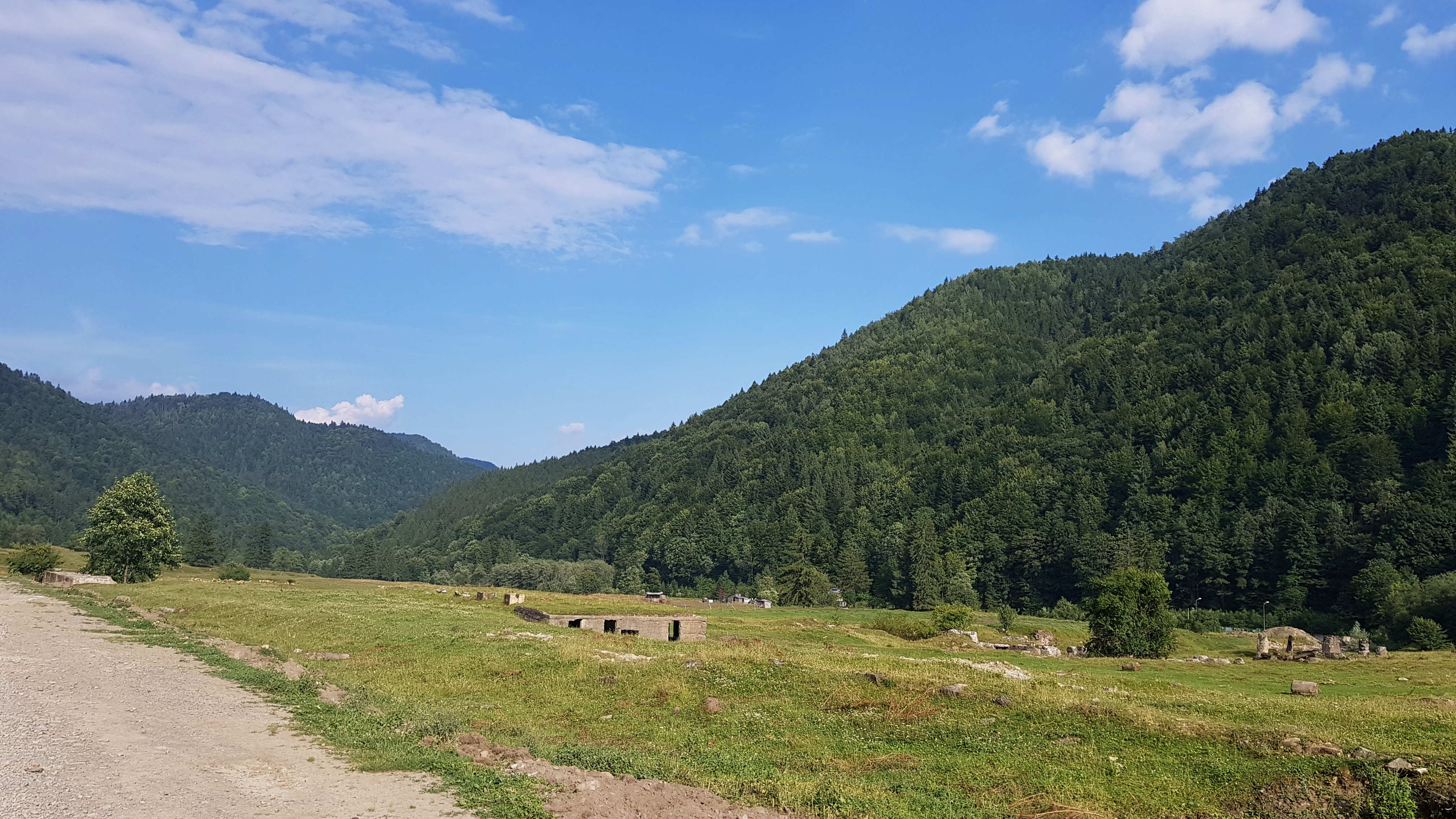
The Uz Valley was a major surprise to me. I entered it right next to a military cemetery built with Hungarian government funding. It was a clear display of Hungarian nationalism. The narrative implied that in both WWI and WWII, Hungarian soldiers were defending their “Hungarian” (sic) homeland, died heroically, and “Greater Hungary” was invaded as a consequence.
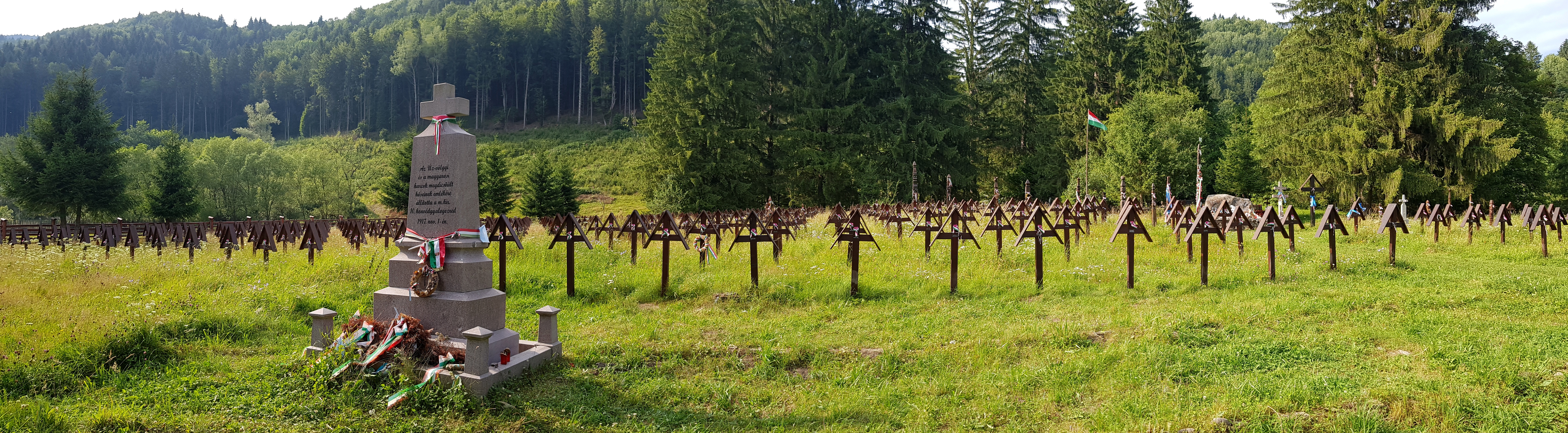
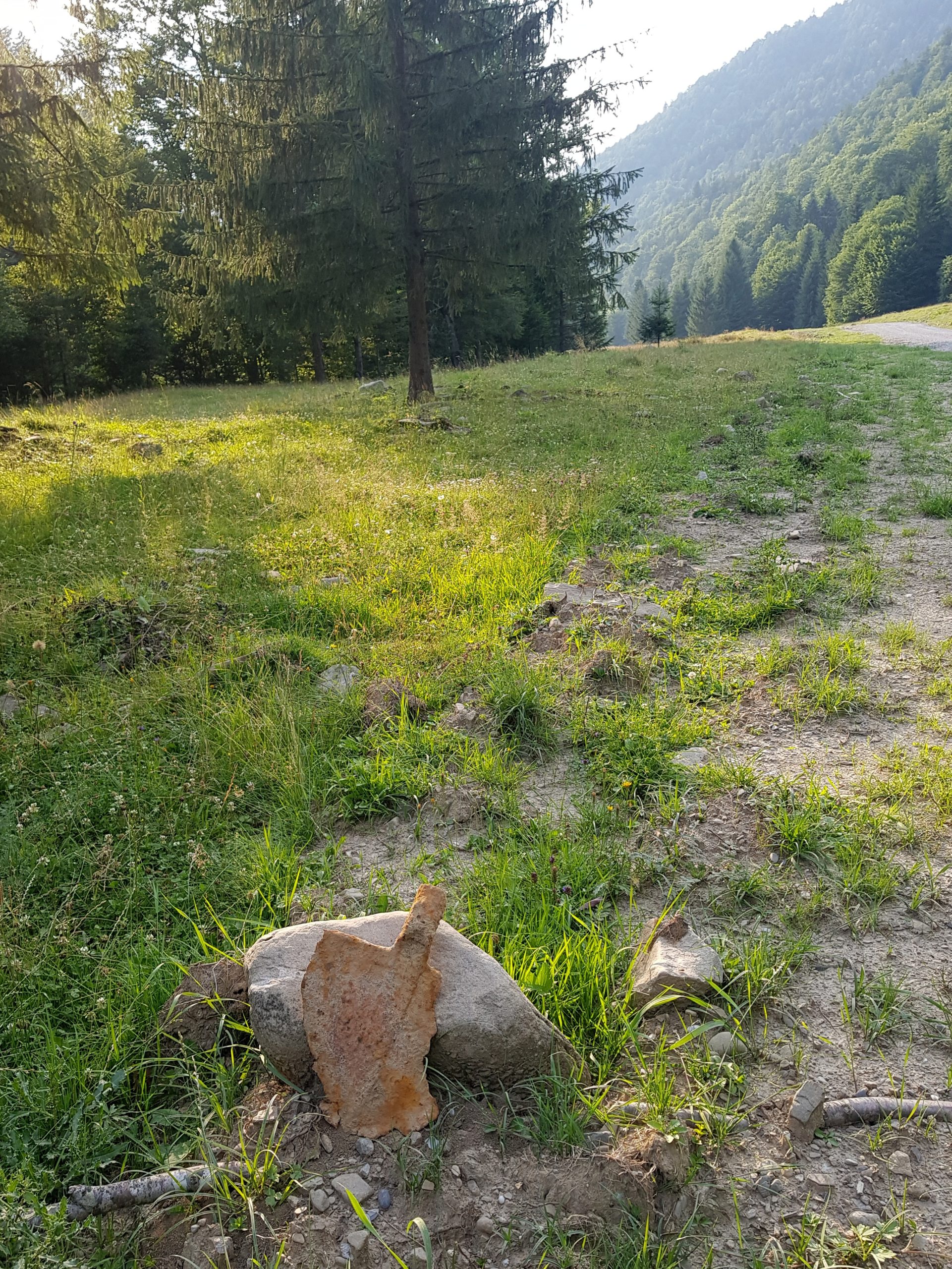
During WWII, 2,700 soldiers from Hungary, along with German and Austrian comrades (with not a single word about the Wehrmacht or the SS), died in the valley, while the Soviets lost 15,000 soldiers, according to Hungarian claims. The once-vibrant village was deserted after WWI and totally destroyed during WWII. Walking through the valley, you can feel this history and can’t help but think about the heavy fighting that left so much blood soaked into the soil in August 1944.
I asked some locals if there was a shop, but they told me it was far down the valley.
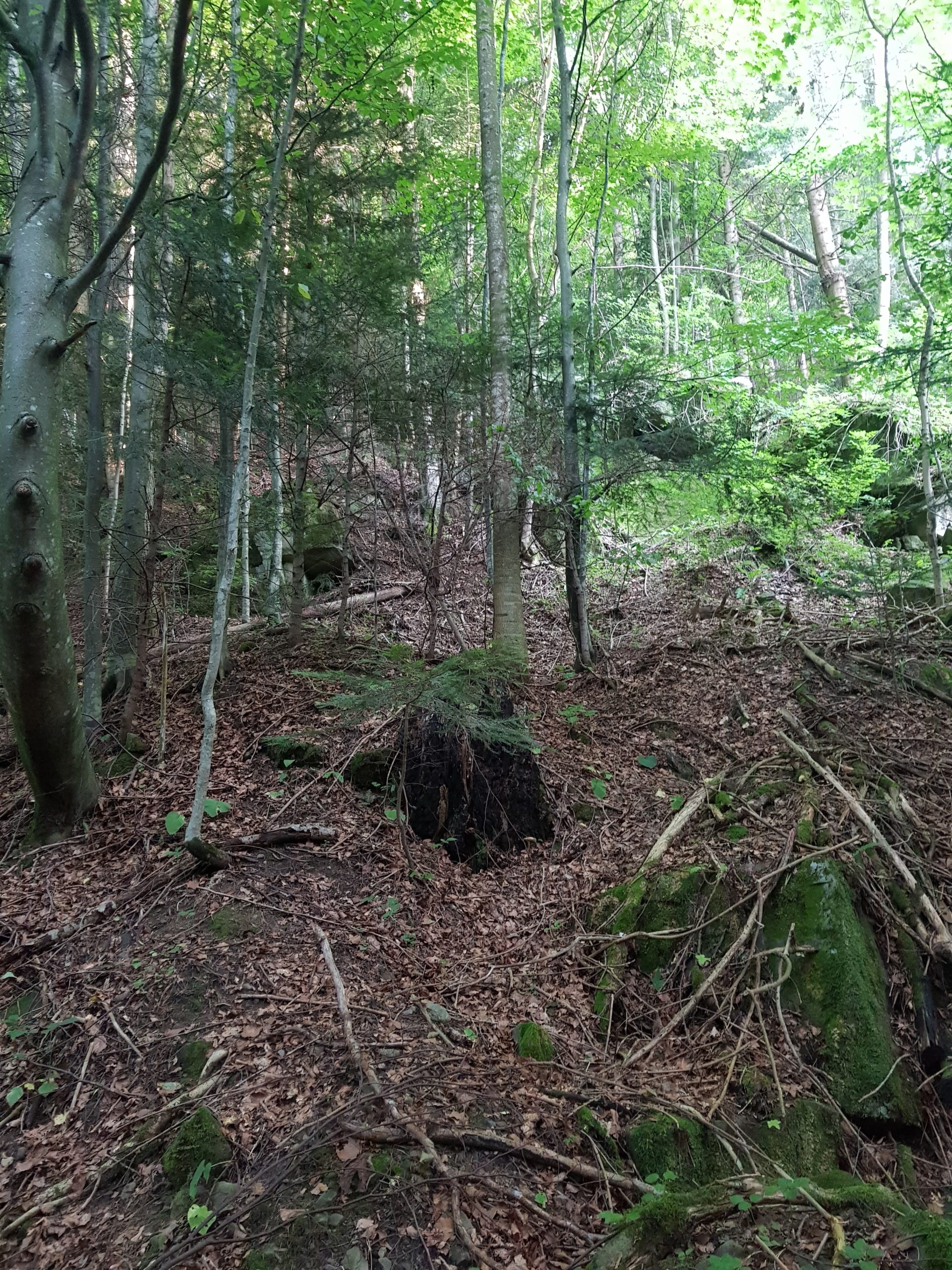
The previous day, I had purchased a map of the Nemira Mountains online via the Avenza app. It was produced by Hungarians, expensive, and turned out to be less accurate than the free OpenTopoMaps; even its alignment with WGS 84 was off. I spent some time searching for a non-existent forest road and finally ended up in Poiana Uzului at around 8 pm, after stopping to see one of the waterfalls on the Uz River.
The man I had previously asked about a shop passed by in a car and pointed toward a house at a crossroads. . I went inside and asked for a shop, but it turned out to be a restaurant owned by a man with big plans and a big heart. He seemed to be a kind of local opinion leader, judging by the reactions of the guys sitting outside, sipping beer and smoking. I was offered dinner and a place to stay overnight. The small room was next to a bathroom, but the shower was just a hose with cold water that also supplied his fish ponds. This was a true permaculture garden, though I am not sure he had ever heard the term. There was no power grid in the village, but Iulian’s solar panels and batteries were more than enough to charge my devices.
Rainy Nemira
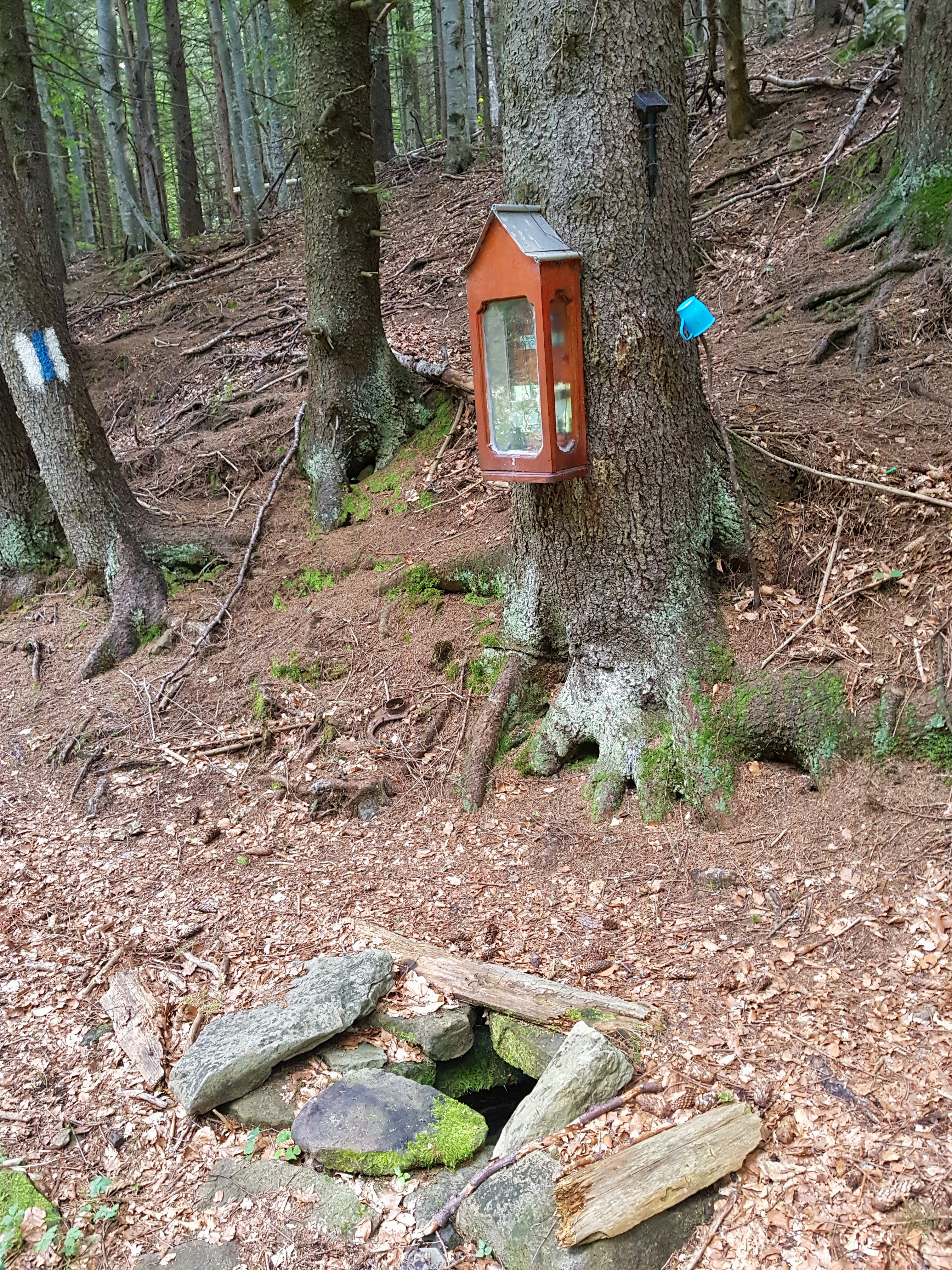
I wanted to start at 6 am on Wednesday, 31st July, to get as far as possible before the forecast afternoon rain. However, Iulian’s breakfast invitation delayed my start until 7:30 am. I was surprised that when it came to payment, he refused to take any money from me. It was a painful ascent of 1,100 metres, as I hiked up fast. I passed former trenches and other remnants of war.

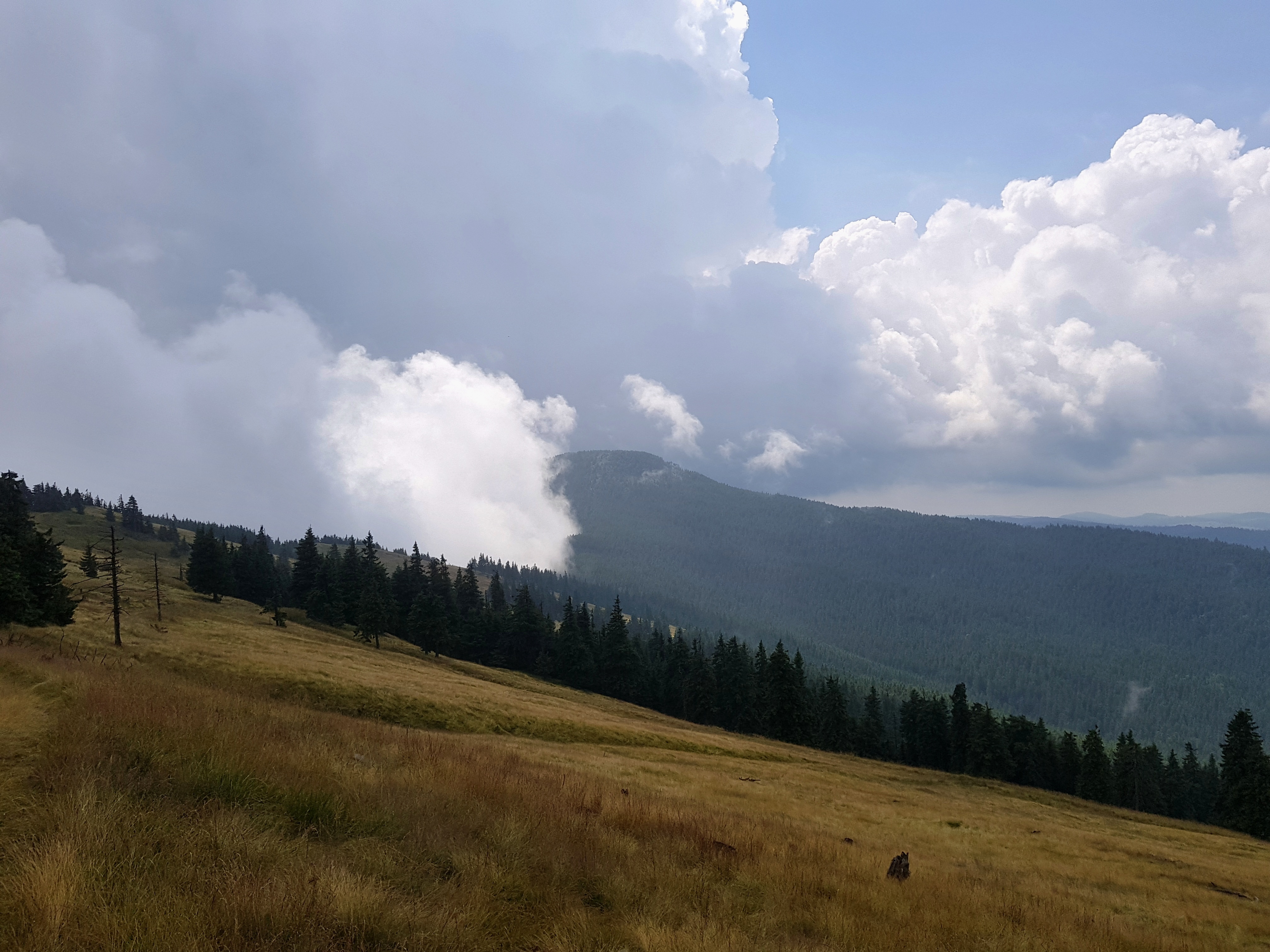
The rain caught me right below Nemira Peak (1649 m), and a thunderstorm with heavy rain hit just as I was finishing my lunch in the pass below the mountain.
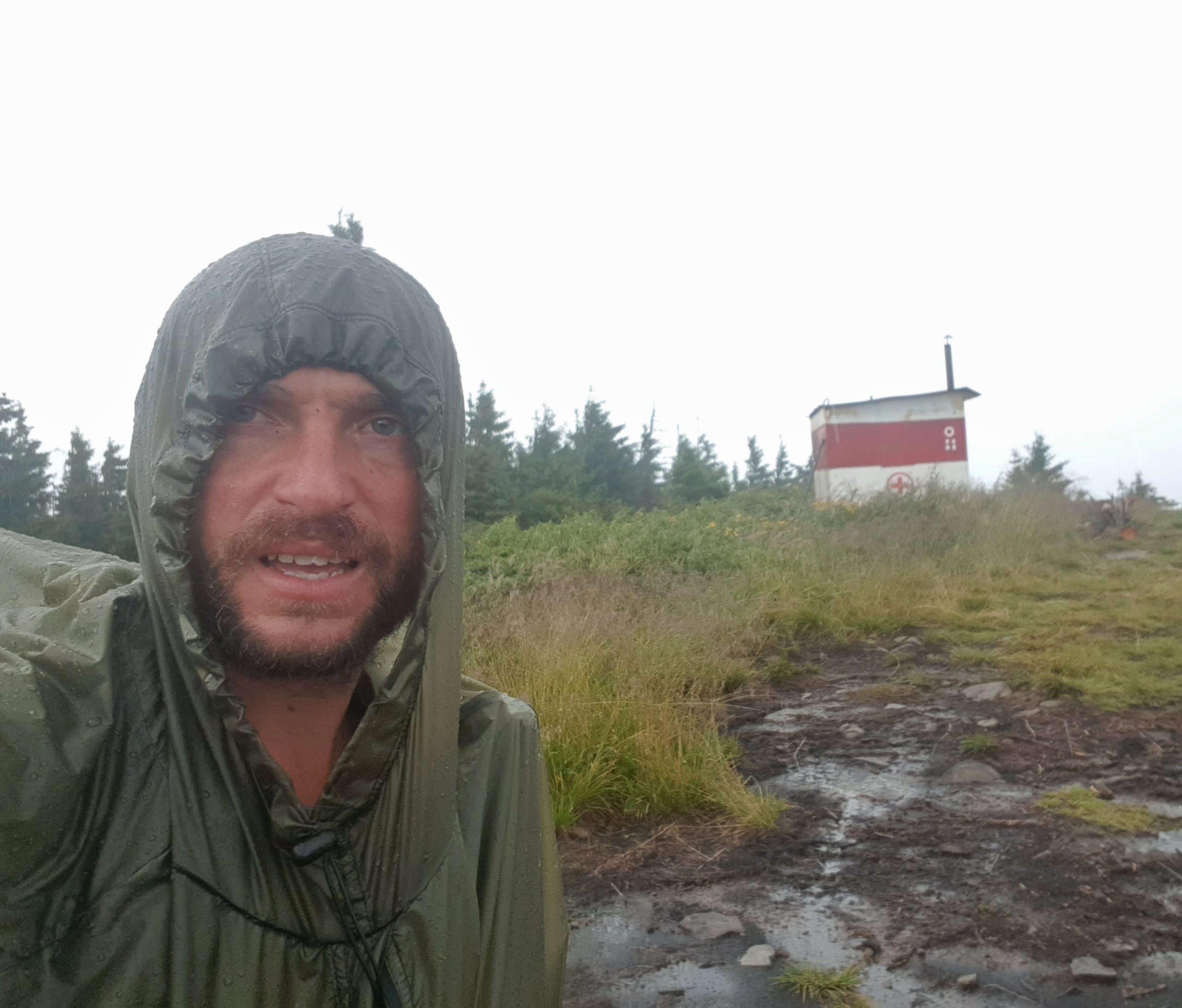
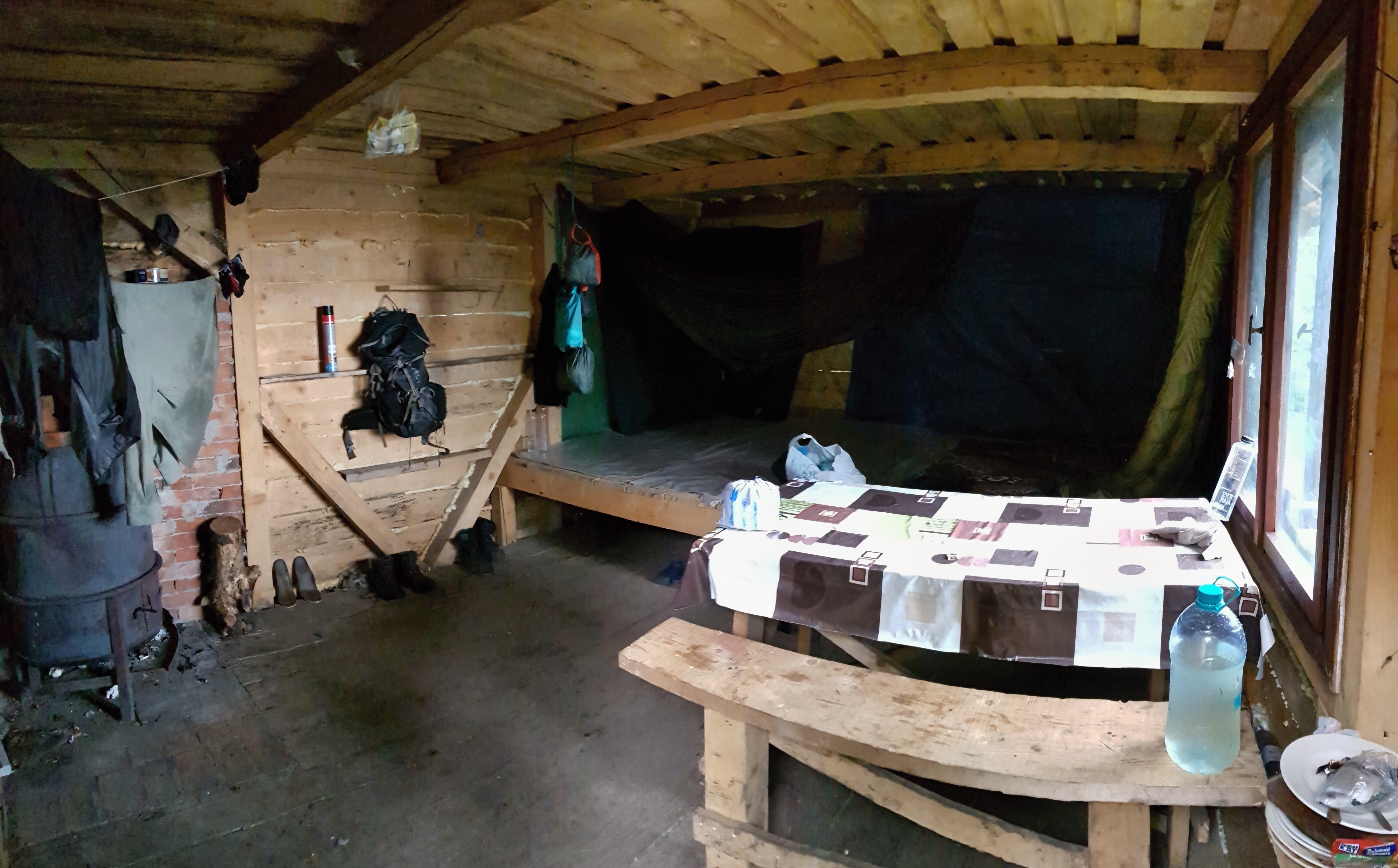
I hiked through the rain to the refugiu on Șandru Peak (1640 m). This turned out to be a metal box with disgusting grafitti inside, where I didn’t feel at all safe while the thunderstorms rolled past. I noticed on my free map app that there were two more shelters (refugii) below the peak, which hadn’t been shown on the map I bought. Only one of them actually existed, but it was very nice, so I made myself at home. Even though it was only 4pm, I decided to stay there, expecting to remain through Thursday too, as heavy rain was forecast for that day. I also discovered that I had picked up a flea while staying overnight in Poiana Uzului.
Soaked again
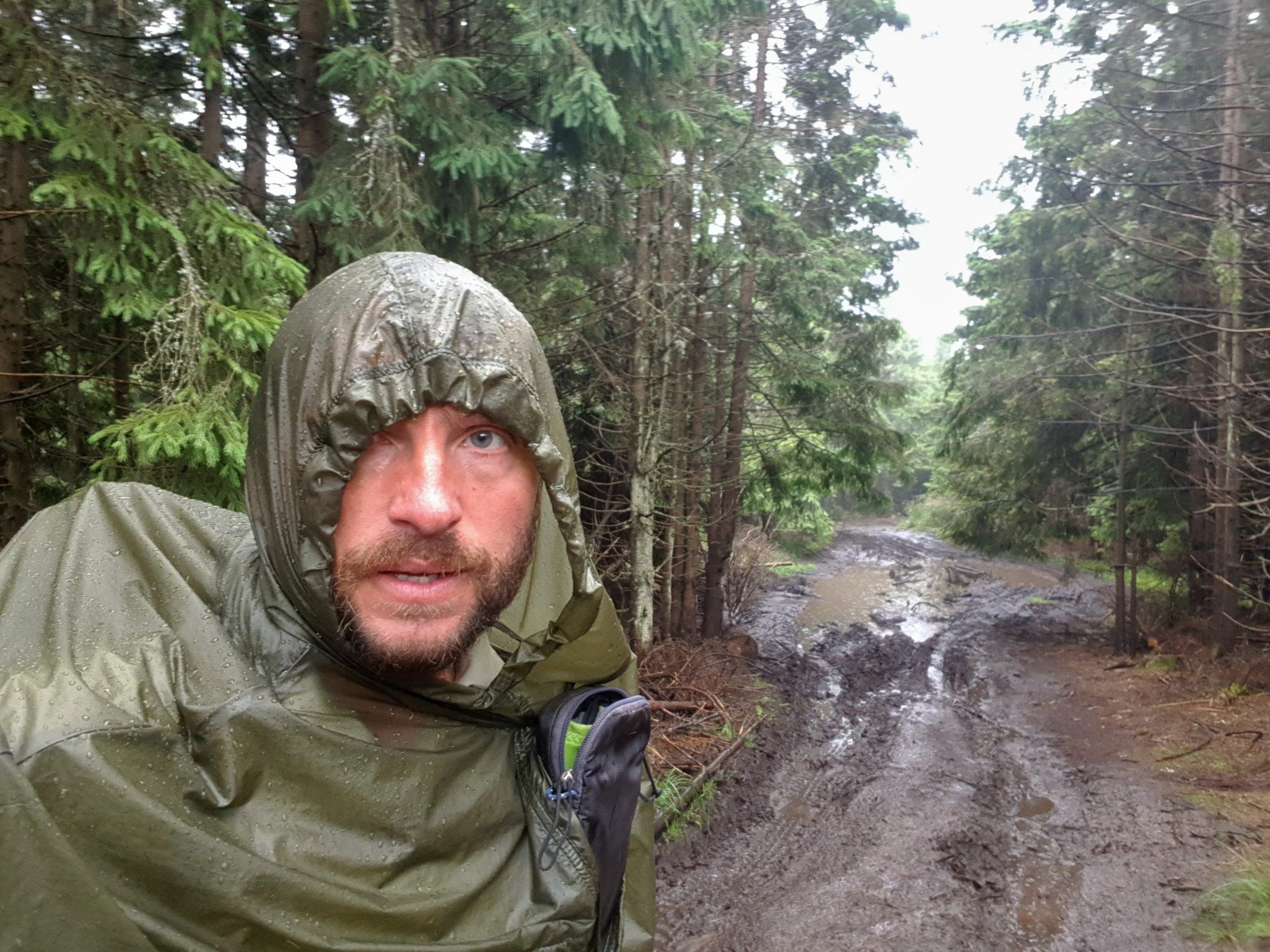
On Thursday, 1st August, I woke up quite late, expecting rain from the early morning according to the weather forecast. To my surprise, there was sunshine. I checked the forecast again, and it had completely changed since the previous night to “occasional showers,” with the heaviest ones expected in the morning. Since it wasn’t raining yet, I packed my gear, ate lunch, and set out for the hike around noon, frustratingly regretting that I had lost half a day. It soon started drizzling, which quickly turned into heavy rain as thunderstorms began rolling through.
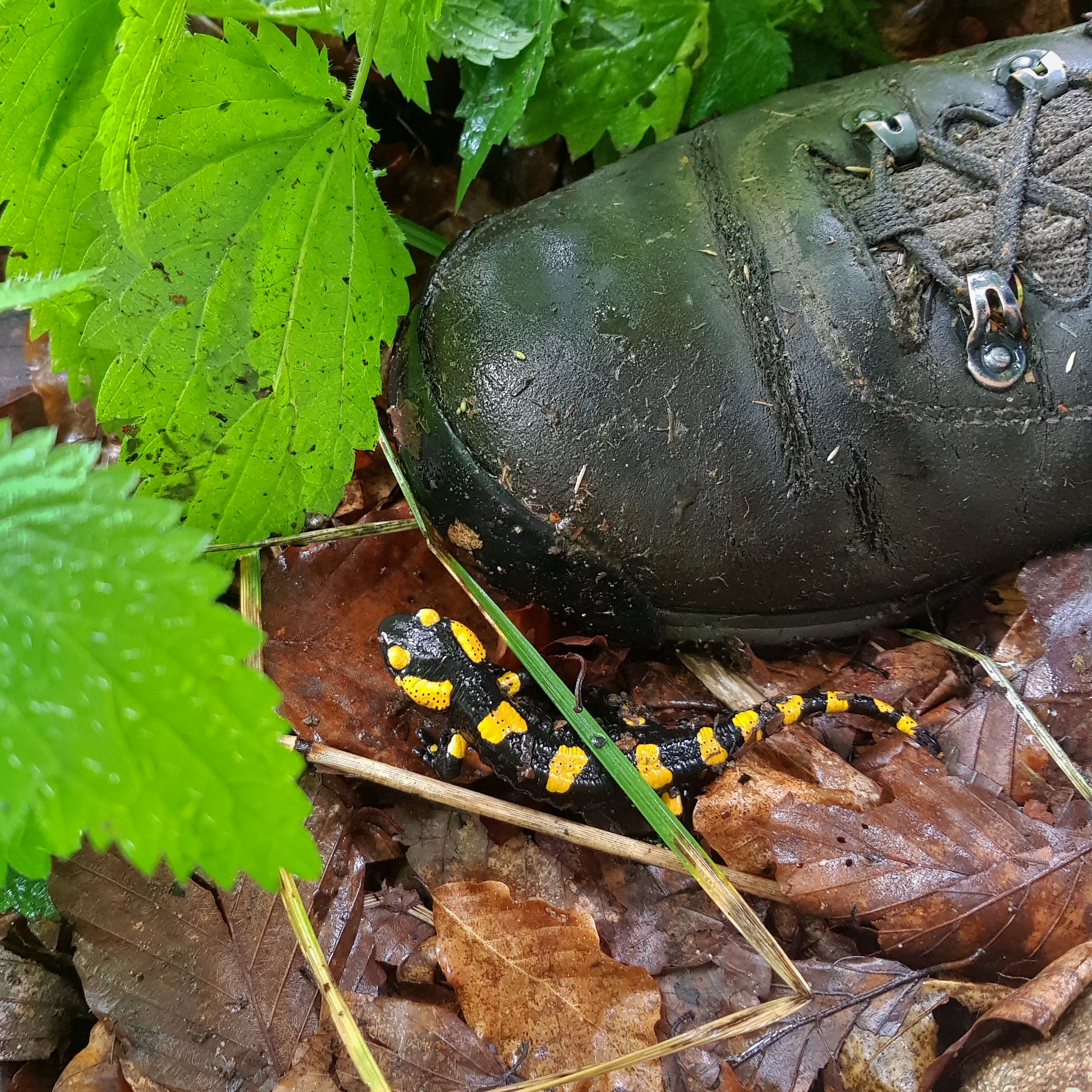
I hiked along muddy forest tracks full of puddles, passing through woods and poianas (mountain meadows), holding onto a vision of drying off a bit, charging my phone, and having a warm dinner at a motel near the Oituz Pass (860 m) that was shown on the map I had bought. I was passing near a shepherd’s hut in the pouring rain when I was caught off guard by dogs that had been waiting, hidden near the path despite the weather. The shepherd was far away inside the hut, and while trying to defend myself against the pack of ten or so dogs, I fell on my back. It was a desperate feeling—being surrounded by a wild pack snapping their teeth just a foot from my body. As I fell, I tore my SMD Gatewood Cape poncho-tarp. The shepherd rushed to the scene in his underwear just as I managed to stand up again, clearly expecting me to have been bitten. Fortunately, I hadn’t been, but the encounter left me genuinely traumatised.
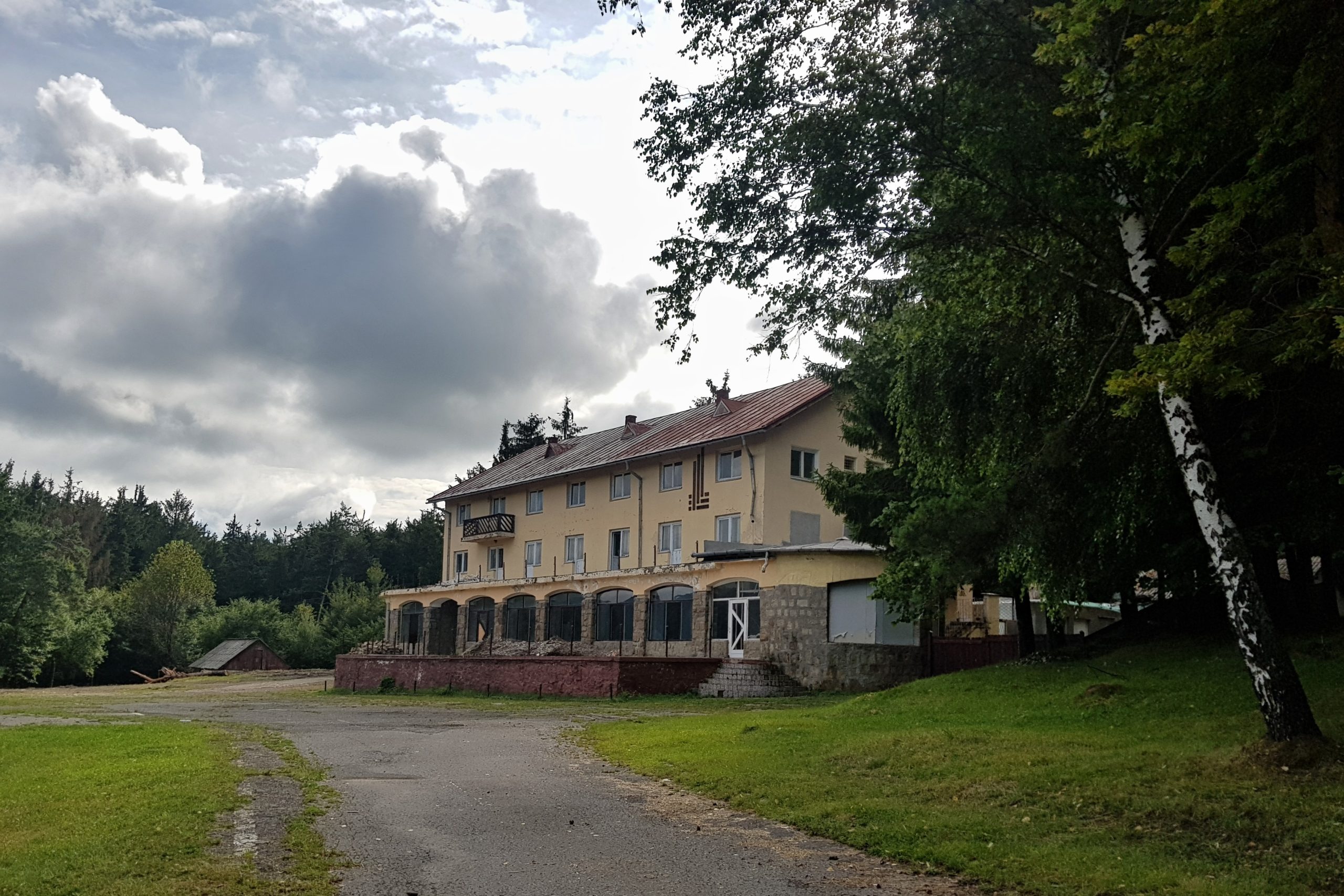
Because I had been looking forward to the motel so much, finding it ruined left me deeply disappointed. I found some olives in a garbage bin at a nearby parking area and ate them. Defeated, I returned to the pass and continued south. It was getting dark when I realised the path led straight through another shepherds’ settlement. The dogs there were already on alert, far away from their humans, so I decided to detour around the hill and camp in a pass on the other side. For the first time on this hike, I could see Munții Baiului on the southwestern horizon. The view left me wondering why on earth I should walk the next 200 km through these forested mountains when I could just take a shortcut through the lowlands.
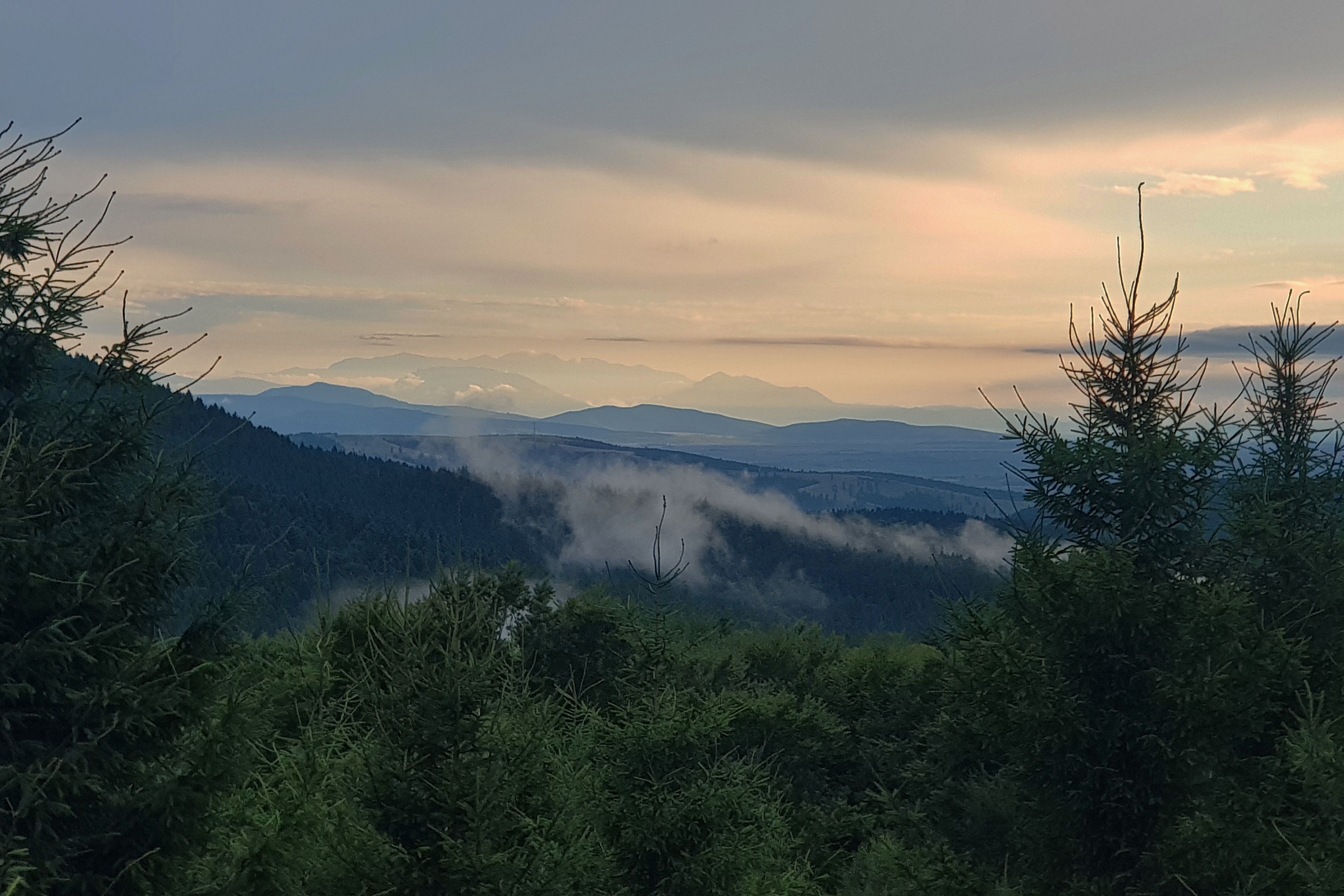
At that point in my journey, I didn’t believe I could make it to the Danube anymore, as I was already five days behind schedule. I realized I could reach the mountains on the horizon within one to three days if I headed in that direction, whereas following my planned route would take another eight days.
I was wet, disappointed after my dashed hopes of a motel dinner, running low on battery for my smartphone and smartwatch, and low on fuel for my stove. I had no prospect of any contact with civilisation for the next seven days, and I knew I couldn’t complete my dream journey as planned anyway. The weather forecast for the coming days promised nothing but more rain. After the traumatic event that afternoon, I was terrified of the dogs and completely unwilling to face dozens more encounters with them. I must admit, my prospects looked incredibly gloomy.
It was getting dark, so I cooked some dinner on my alcohol stove, trying to be as quiet as possible since I was still quite close to the shepherds, and their dogs have excellent hearing and sense of smell. Fortunately, the east wind was blowing hard. As I stood up from squatting near my tarp, I caught a movement with my peripheral vision. It was a bear, and it bolted about 60 metres away from me. The bear had probably been approaching from the south, and when I stood up, it spotted me and decided to run for it. I hadn’t seen many running bears before, but this one was incredibly noisy and fast as hell. Believe me, bears can run just as fast as deer or wild boars.
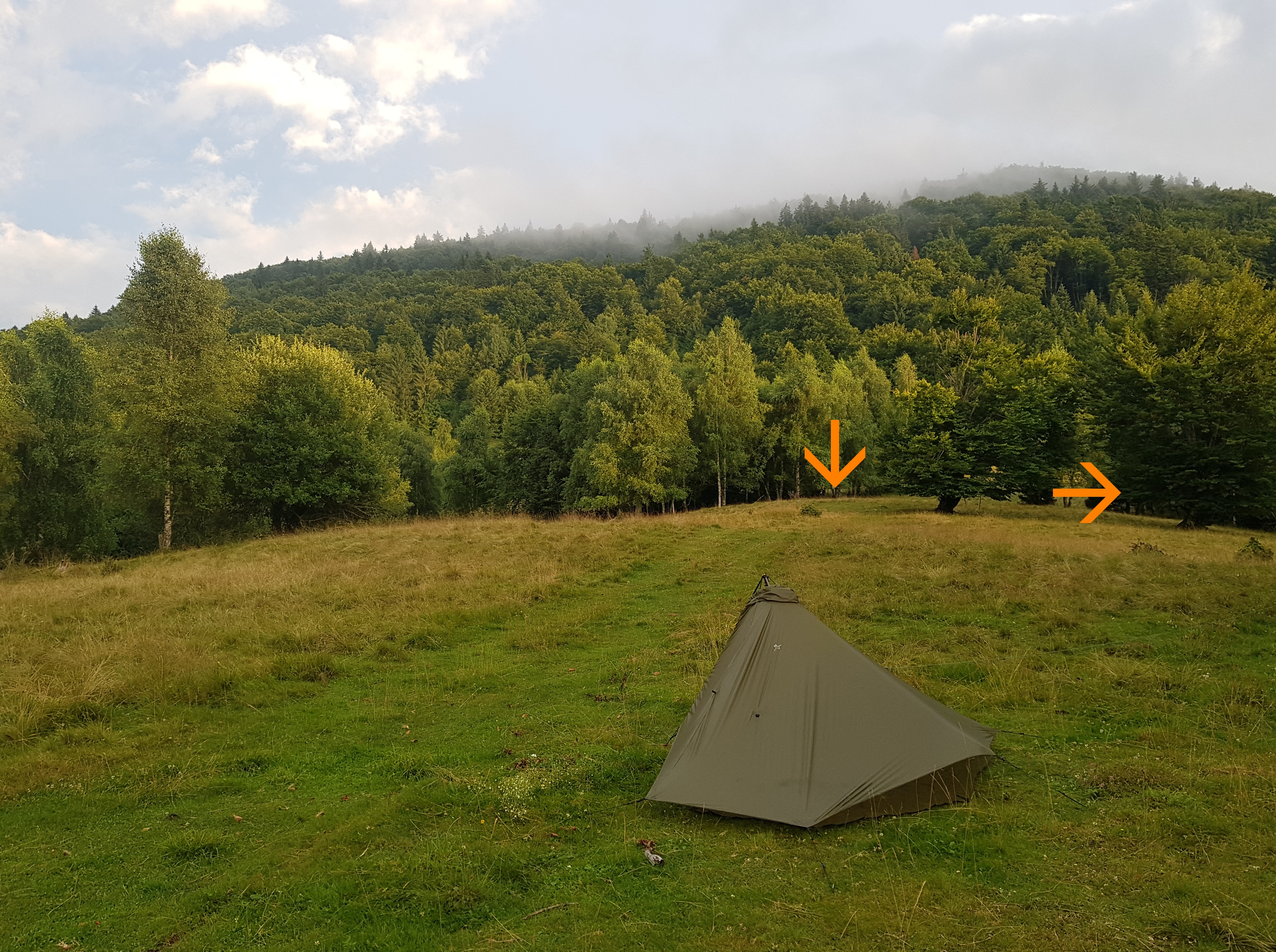
Spoon leading to another bear encounter
I woke up at dawn on Friday, 2nd August, silently packed my gear, and set out for the hike. Everything was soaked from the previous day’s rain, and the forecast for the next day was even bleaker—continuous rain from early morning. I moved silently through the dense fog, listening out for where the shepherd huts might be and trying to avoid them. At one point, some dogs caught my scent, but I managed to run away. Being constantly on alert was mentally exhausting and was really slowing me down. My key dilemma was: should I stay silent to avoid the dogs, or jangle my bear bells to avoid the bears?
I realised that some ancient hunter instincts had awakened within me—I started reading tracks: how old they were, which animals they belonged to, and which direction and when they had gone. Tracking gave me an idea of what was waiting for me behind the next hill. To my surprise, this just happened effortlessly, and I found myself relying on my interpretation of the tracks more and more each day.
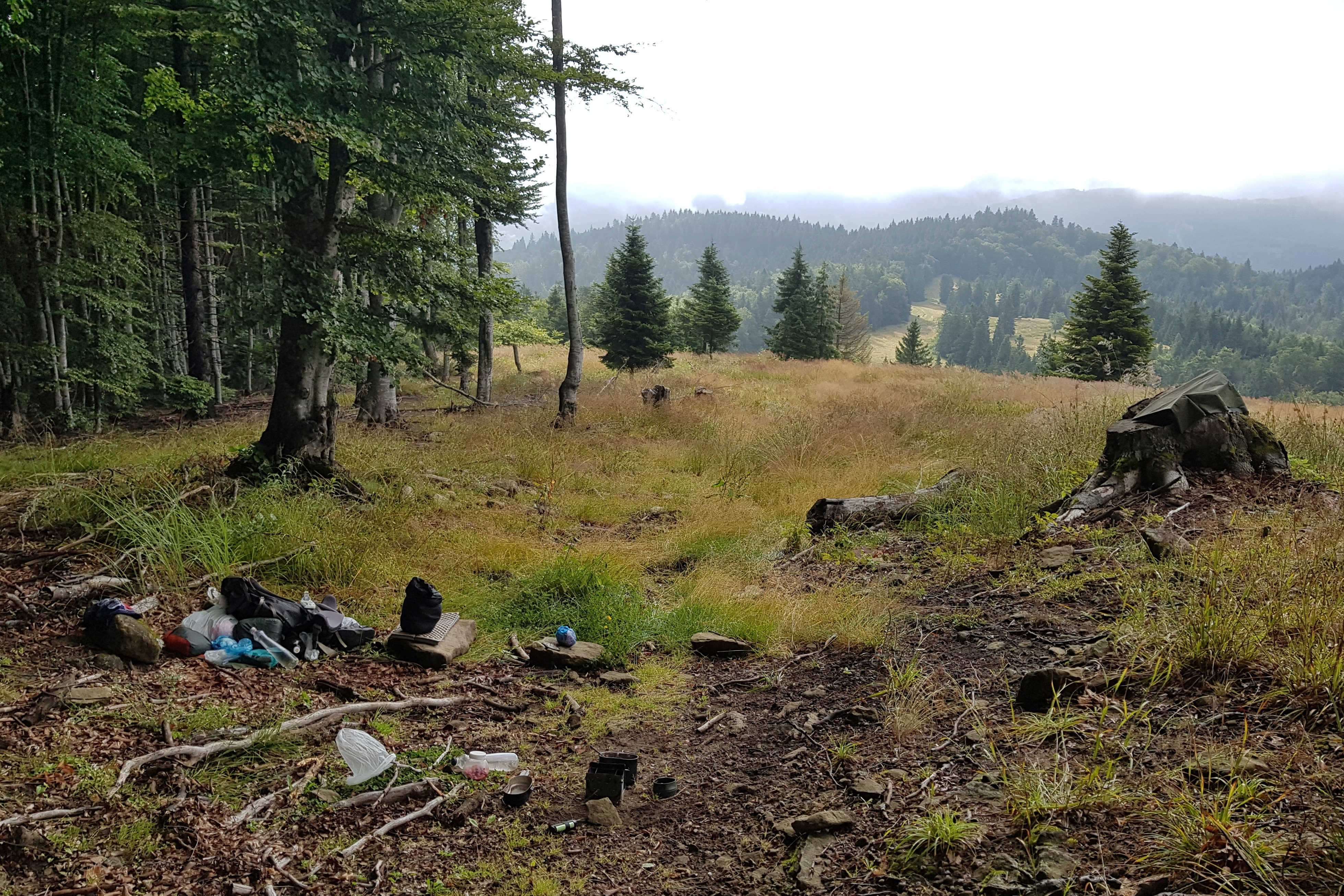
After crossing a forest, I cooked breakfast. To my surprise, the road in the next pass (1070 m) was quite busy, so I decided to hitchhike 10 kilometres to the village of Ojdula to buy some lunch and recharge my phone and batteries. It was a good choice, as it drove away my fears of running out of power and food.
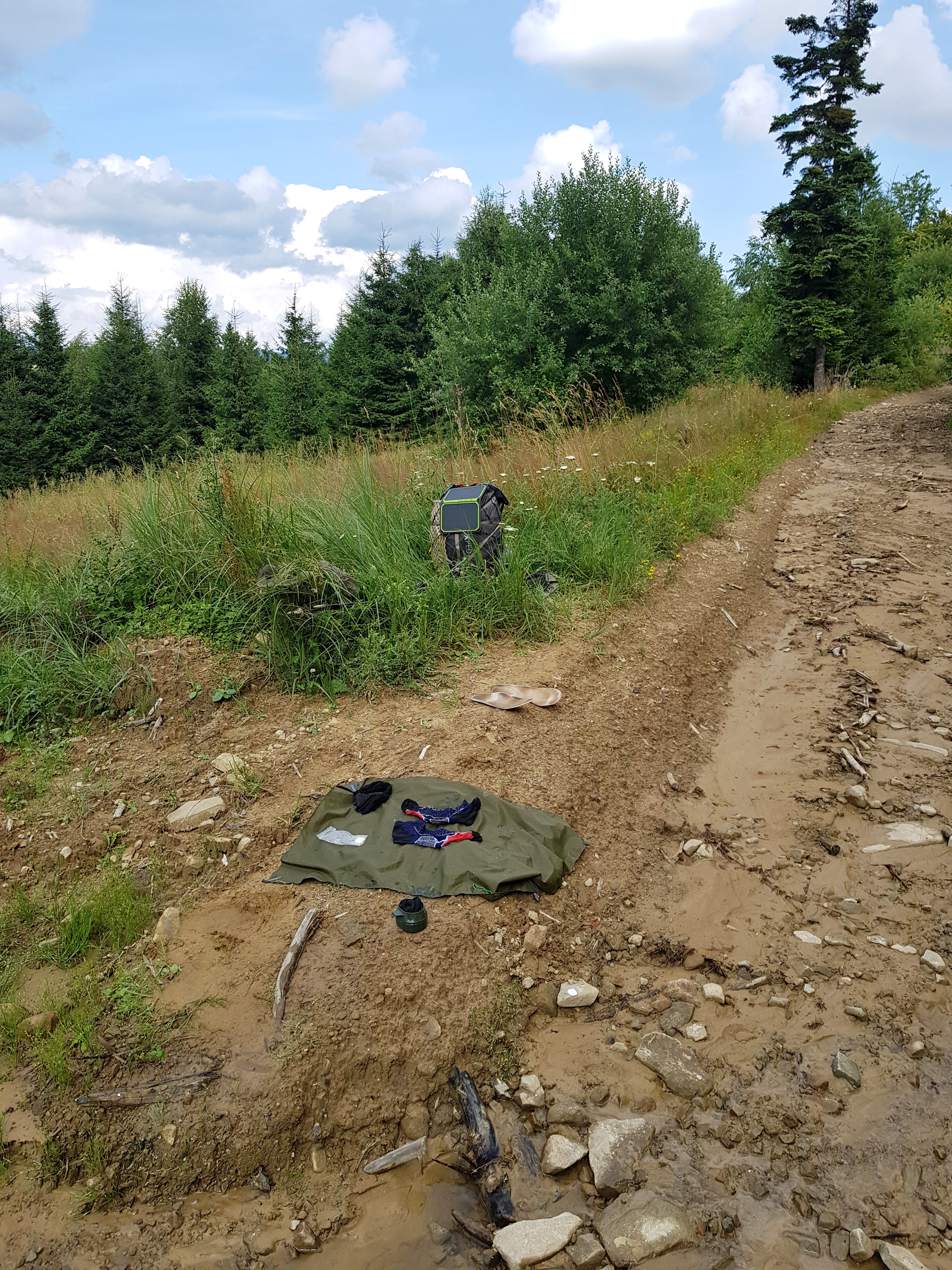
Unfortunately, while having lunch, I realised I had lost my spoon again. I must have left it at the breakfast spot. So, after hitchhiking back to the pass, I hid my backpack there and walked 4 km back to the breakfast spot and back. To my frustration, the spoon wasn’t immediately visible; it took me a painful ten minutes to find it. Near the pass, I spent another hour washing my socks, as it was my only chance for them to dry before the heavy rains arrived on Saturday and Sunday. I checked my feet and they were okay, but my boots stank after being constantly wet for several days, and they were passing the smell onto my socks, so I washed the insoles too. It was 5 pm by the time I set off from the pass, facing a 23 km hike ahead to the refugiu under Lacăuți Peak (1777 m). What had seemed like a short hike in the morning had now turned into a race against time.
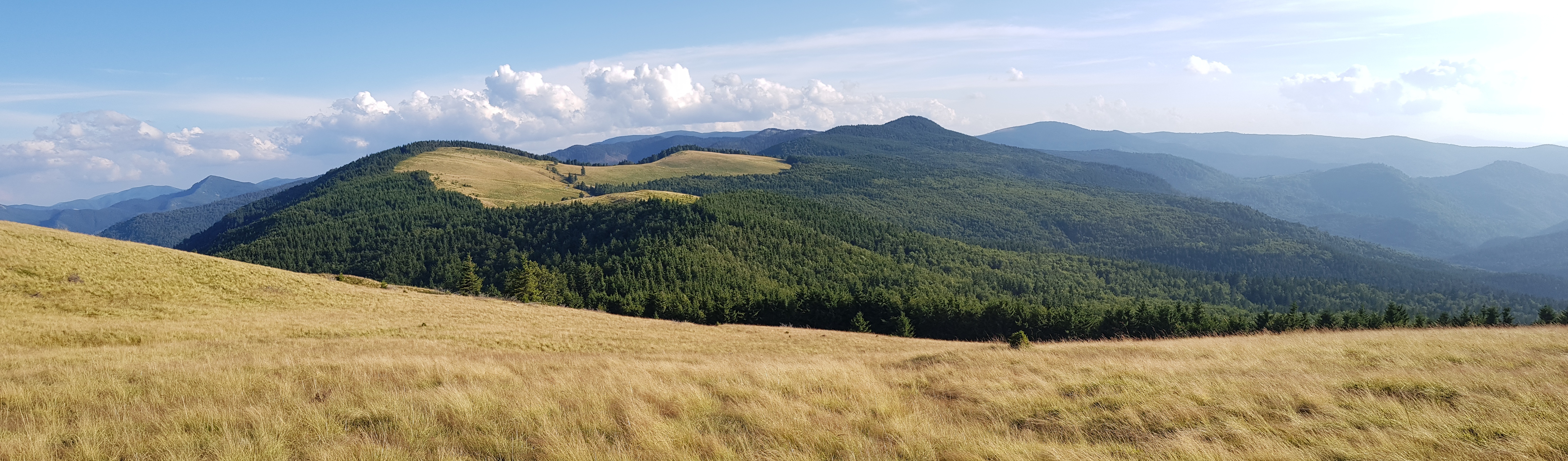
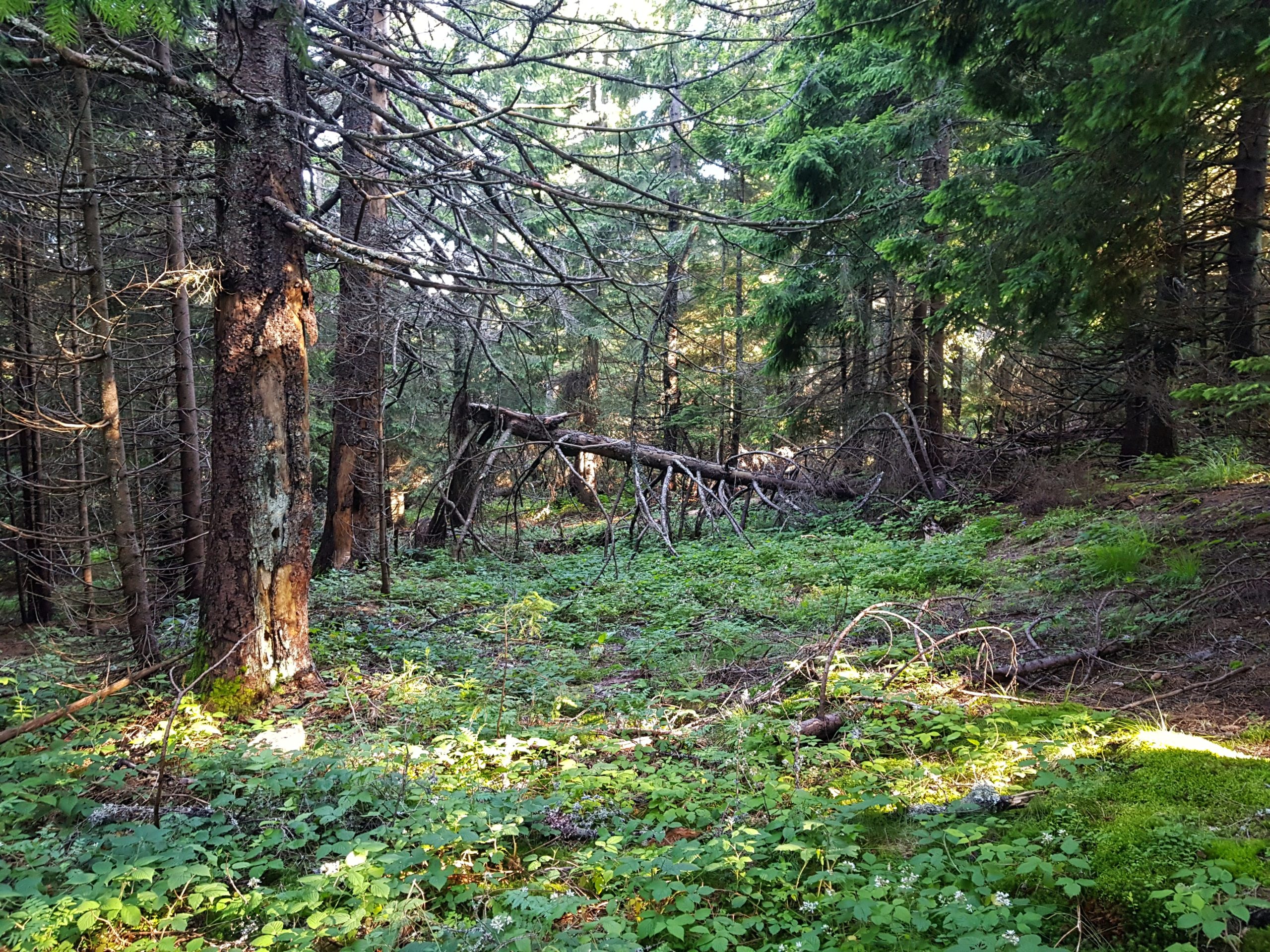
I wanted to reach the shelter before the night rains caught me. It was obvious I would need to walk in the dark, with a high probability of encountering bears. I called home to let my wife know I would be hiking in the dark and promised to send a notification as soon as I reached the shelter. At about 6:30 pm, I came across a sign stating that the peak was still an 8 to 9-hour walk away. Up to that point, I had already gone through sections where the trail was non-existent, and I could hardly discern what had probably once been a forest path. Signs of bear activity were frequent.
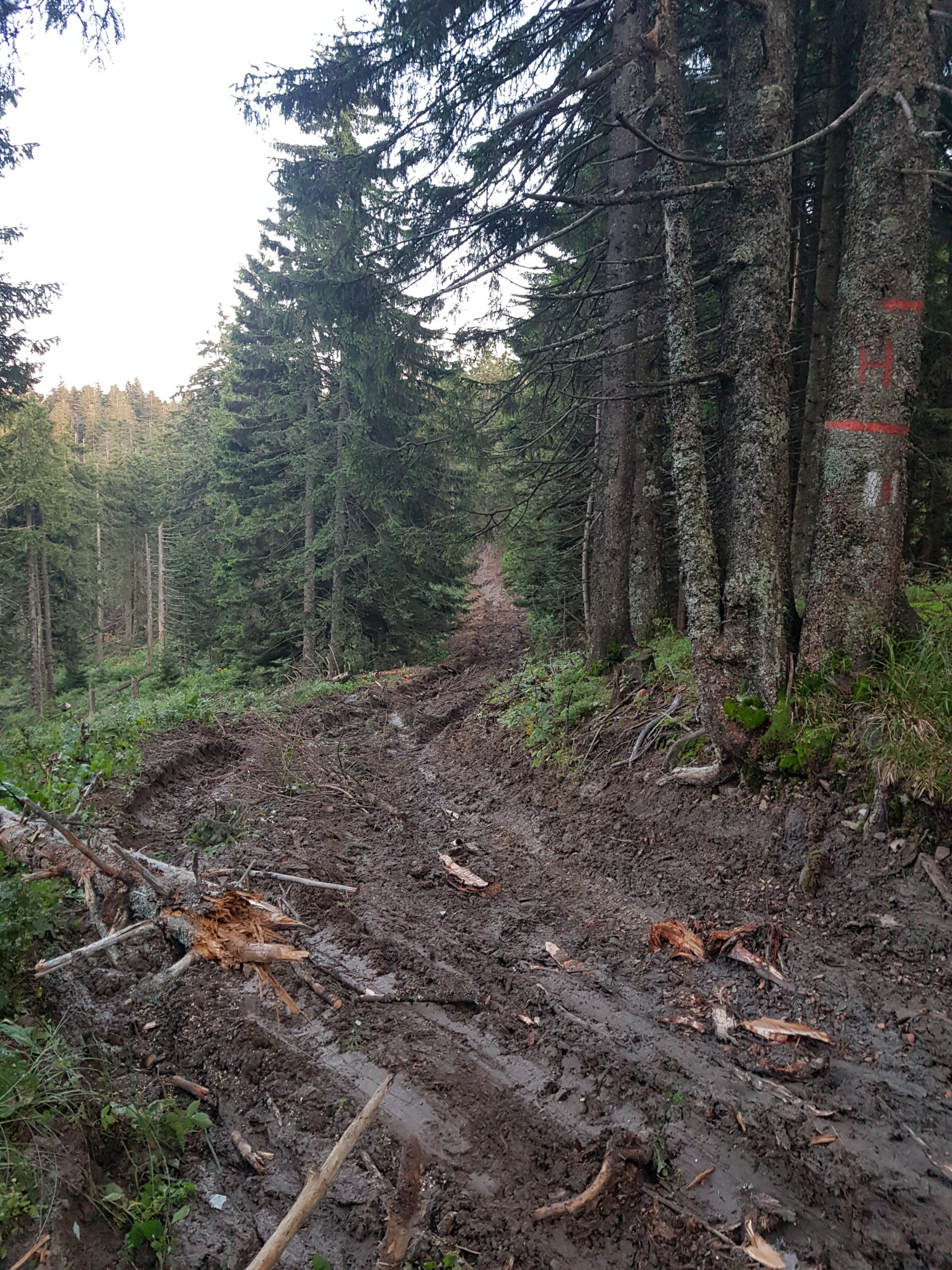
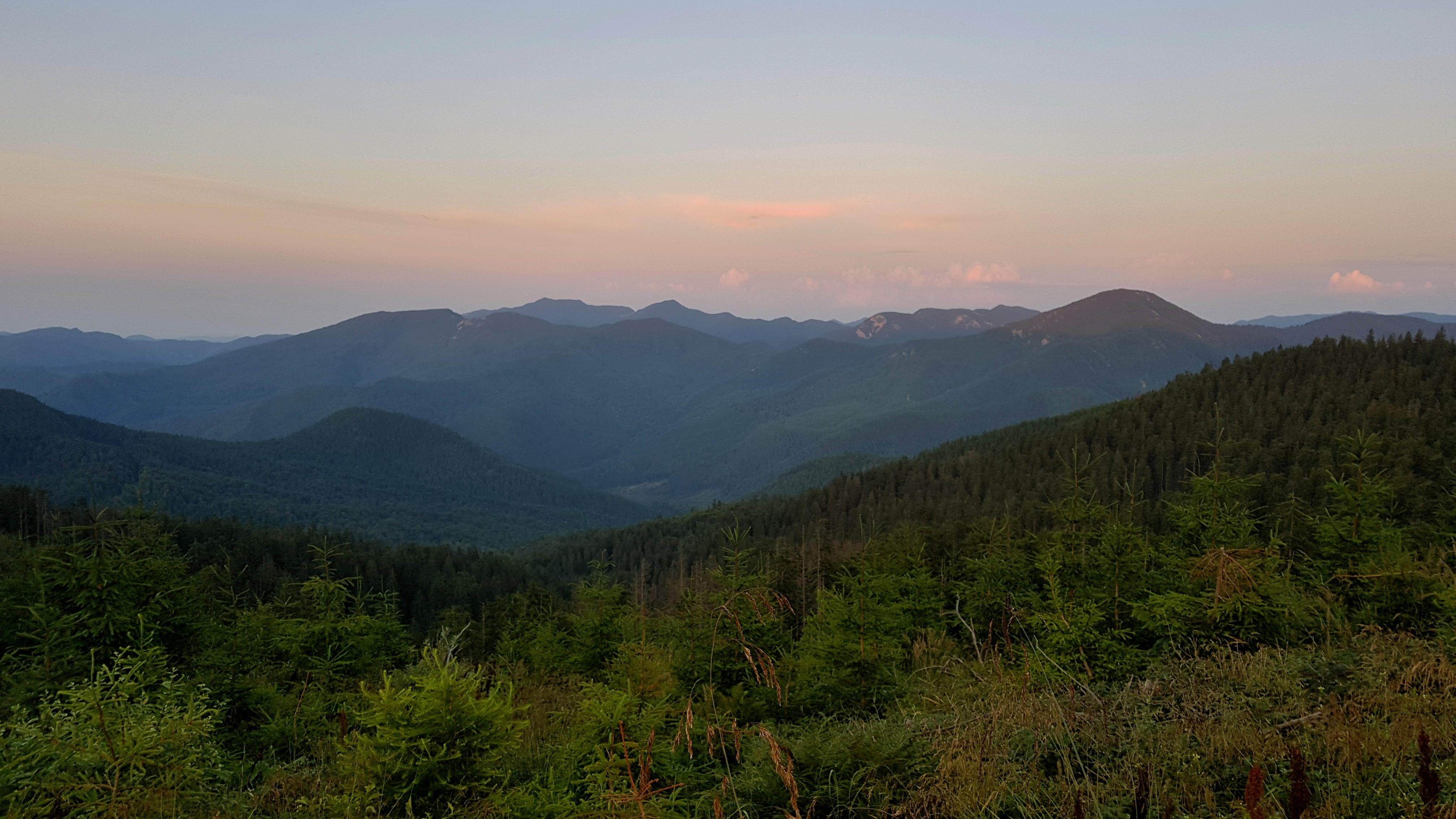
However, even without having had dinner, I mobilised all my energy and pressed on as fast as possible. Fortunately, the trail was well-marked; unfortunately, it led along forest tracks covered in fresh mud left behind by loggers during the workweek. The area had no mobile signal coverage. At sunset, I caught a glimpse through the clearings of the more open eastern ridges of the Vrancea mountain range, including Cristianu Peak (1629 m).
It grew dark, so I put my headlamp on. At one point, I spotted fresh bear tracks. It was a big guy, and he was heading in my direction. I continued singing loudly and making noise with my bells, praying for God’s protection. We finally crossed paths at a poiana (mountain meadow) below Lujerul-Cobert Peak (1517 m). The bear was jumping in the grass about 150 metres away, but when he spotted me, he ducked down, and I could only see his head. I kept walking across the meadow, deliberately paying no attention to him.
Once I had passed him and thanked God for my safety, my smatwatch beeped. I suddenly realised I had taken the wrong turn. I should have turned left immediately upon entering the meadow, which would have actually avoided passing the bear altogether. So, I turned back and took the correct path, assuming the bear would still be in the same spot. But he wasn’t. He had retreated right onto my trail, so as I approached the forest, I was startled when a huge, shadowy mass suddenly started moving. I could see the bear running uphill, growling loudly. I refused to follow the trail markers that pointed straight in the bear’s direction and stayed on the forest track instead, which later turned out to be the correct route anyway.
I walked incredibly fast, running wherever possible, without feeling any fatigue due to the adrenaline. I kept my energy up with a glucose bar while walking. I kept track of the time and kilometres left to the shelter, chanted, whistled, and scanned the ground for bear tracks, but nothing else happened—apart from encountering some crazy guard dogs at the Lacăuți transmission station, which were fortunately behind a fence. At around 11 pm, I finally reached the refugiu, thanking God for his protection. I bet that was a hiking speed record between the pass and the peak.
But the day wasn’t over yet. Despite my exhaustion, I needed to find a signal and text my wife, collect firewood and water before the forecast rain turned the streams muddy and soaked the wood. I didn’t have any luck finding a proper spring, but I collected some water from small streams running along the forest road. Settling into the shelter and making it feel like home also took some time.
The rest day
I woke up at about 8 am on Saturday, 3rd August, having gone to bed very late the night before. Before I could finally get into my sleeping bag in the refugiu, I had needed to gather drinking water and fuel for the woodstove, since the weather forecast predicted the rain would start at 3 am.
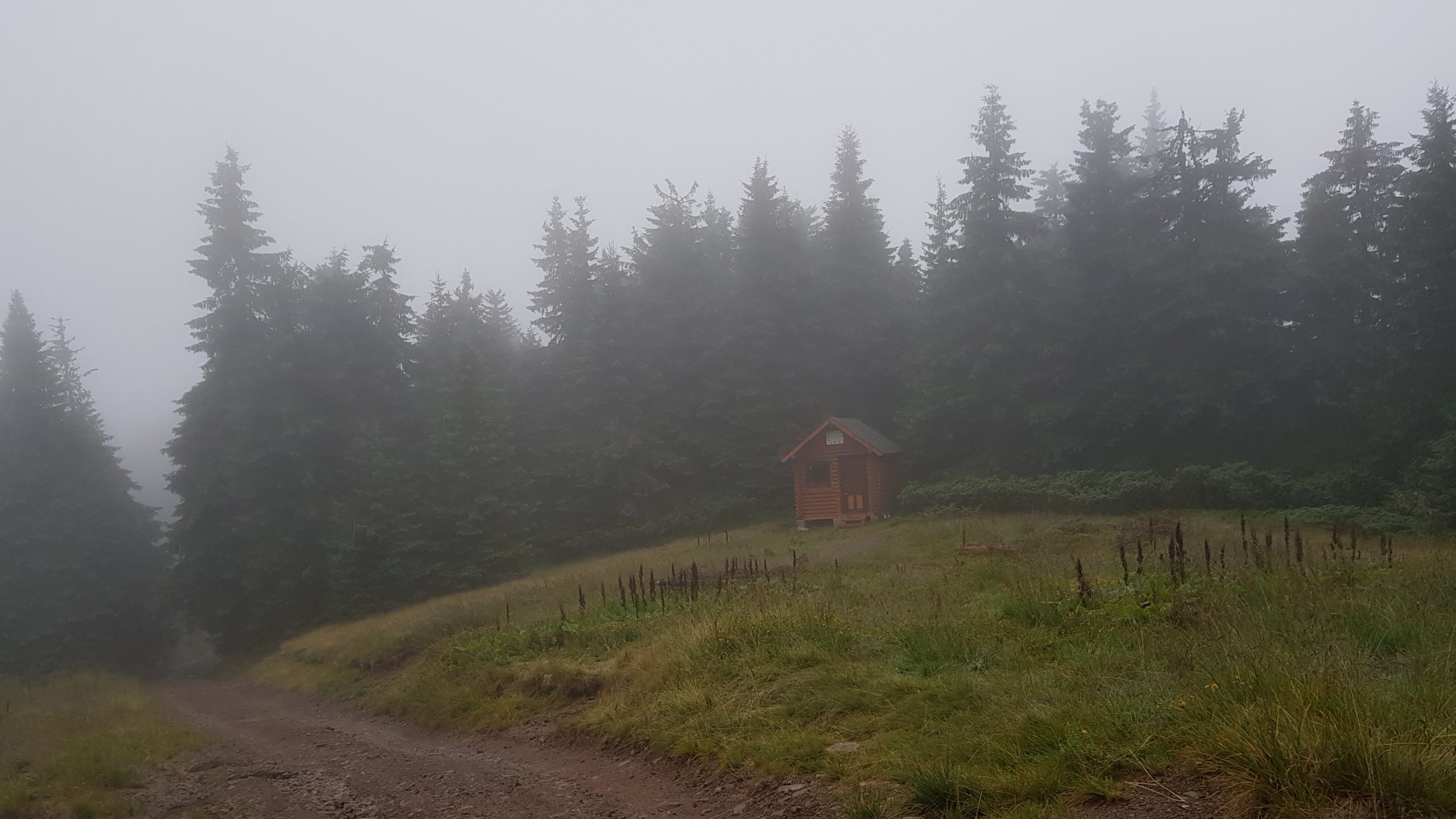
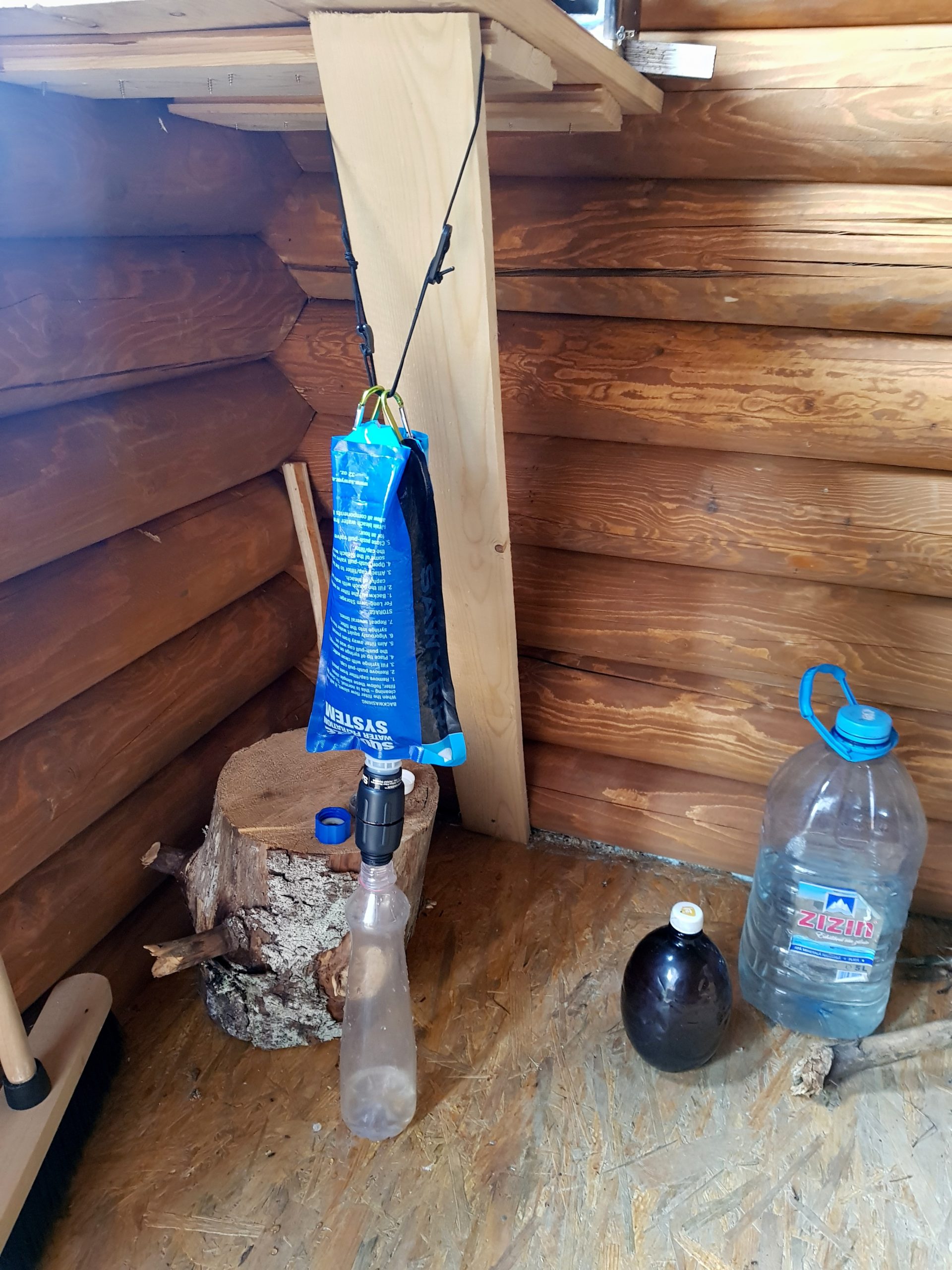
Surprisingly, there was no rain initially, and every now and then the sun shone through the clouds—which, at an altitude of 1,700 metres, translated into thick fog. It reminded me of the situation two days earlier, so I ran up a hill to catch a GSM signal for an updated forecast. It promised rain later in the day, so I decided to stay in my temporary home, which turned out to be an excellent decision. It rained non-stop through the entire afternoon and evening.
I eventually ran out of water and was on the verge of having to filter the dirty puddles from the tracks, but fortunately, two guys in an all-terrain vehicle—the only two passers-by on this weekend day—left me some of theirs. (Months later, I learnt from a friend that there actually was a spring in the forest just to the north.) Saved from dehydration, I spent the day writing my blog, cooking, repairing my gear, and doing some laundry. The time passed much faster than I had expected, and I still had things left on my to-do list.
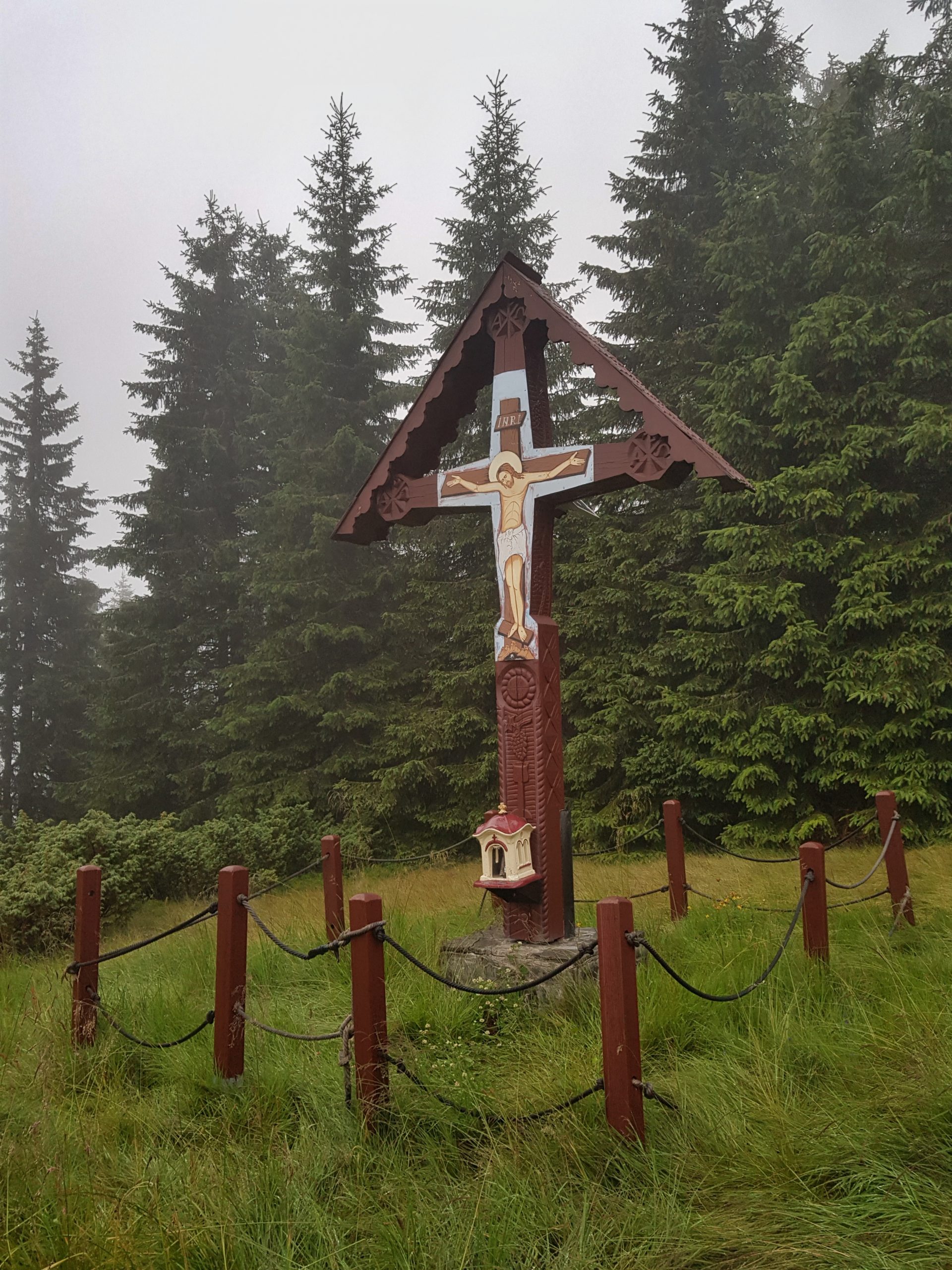
There was a cross nearby equipped with a solar panel and batteries that ran a small eternal light. I tried to hook up my gadgets by cutting open my backup micro USB cable to wire it directly, but it didn’t provide the right voltage. As I learnt later, it’s wise to carry a small 12V adapter into the Romanian mountains, as this allows you to get electricity at some refugii and from certain shepherds.
I went to bed just before midnight while the rain was still drumming loudly on the roof of the shelter.
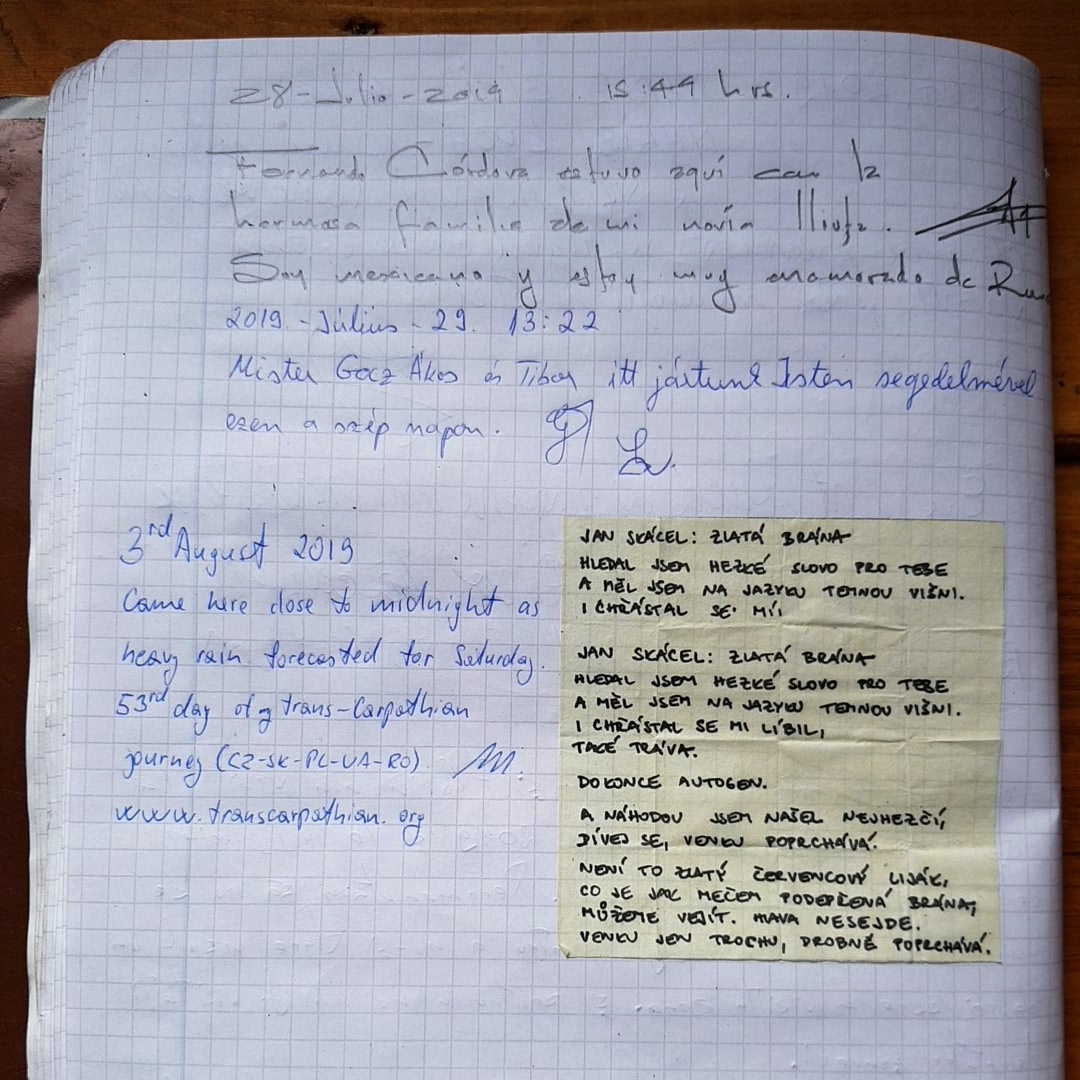
Five weeks later, I received a heartwarming thank-you letter from a Czech tourist who was walking these mountains in the opposite direction and felt just as lonely as I had. He found my entry in the refugiu logbook along with one of Jan Skácel’s poems—copies of which I had received from Pája and had been leaving behind along my route. He wrote to tell me that finding it had completely made his day and warmed his heart.
Meeting a wolf
I got up quite late on Sunday, 4th August. I wasn’t happy about it, as I had wanted to get as far as possible since only showers were forecasted, but it later turned out that my timing was just right. I was soon soaked from walking through the wet vegetation.
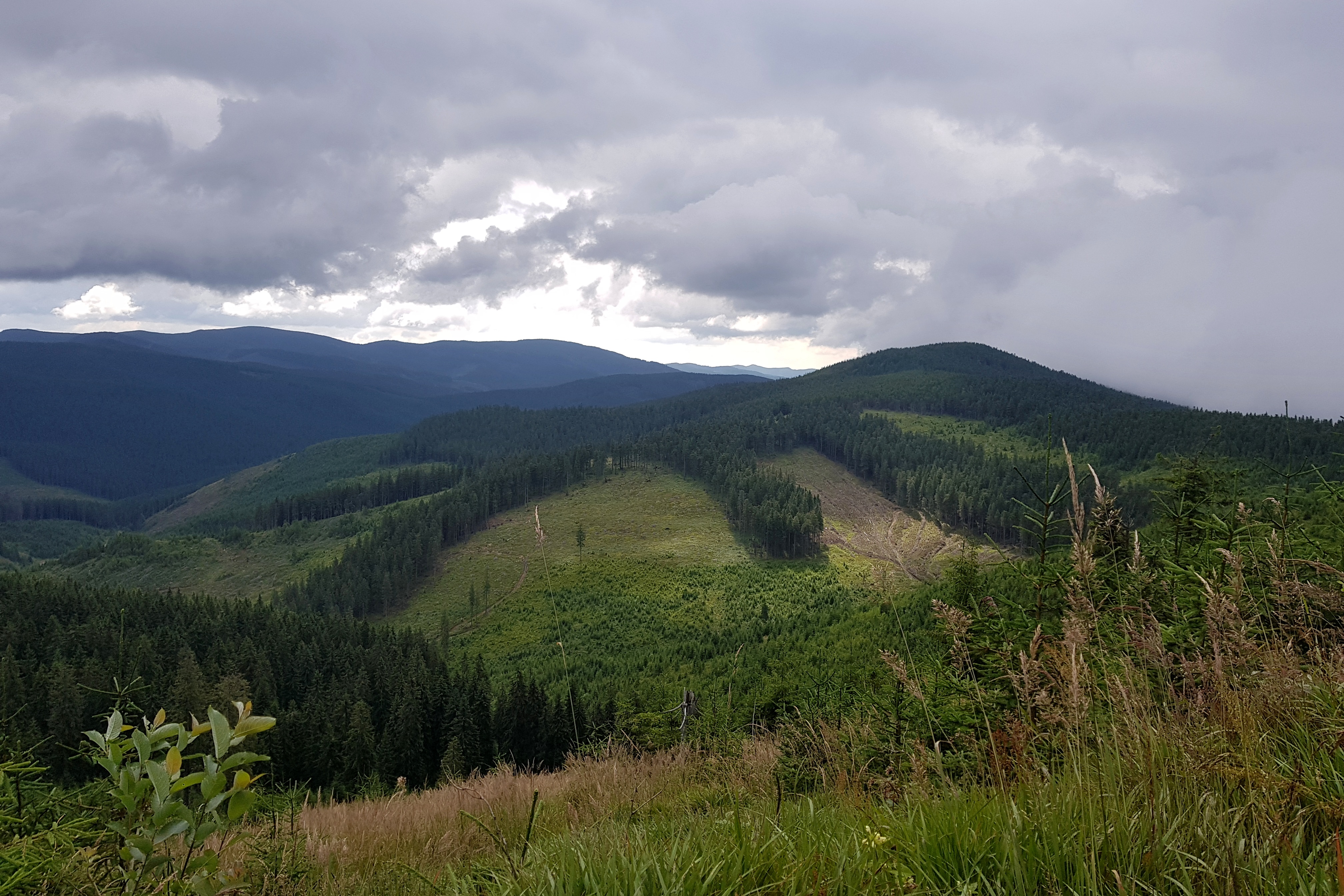
Clearcuts opened up views over this part of the Vrancea Mountains. Once heavily forested, they are now extensively logged, like many other forests in Romania. The tourist signage soon disappeared. It was clear that nowadays, only bears walk along what used to be forest roads. No wonder I lost my way, but it didn’t make much difference whether I was walking through the thick forest or along an overgrown forest road blocked by fallen trees and high vegetation.
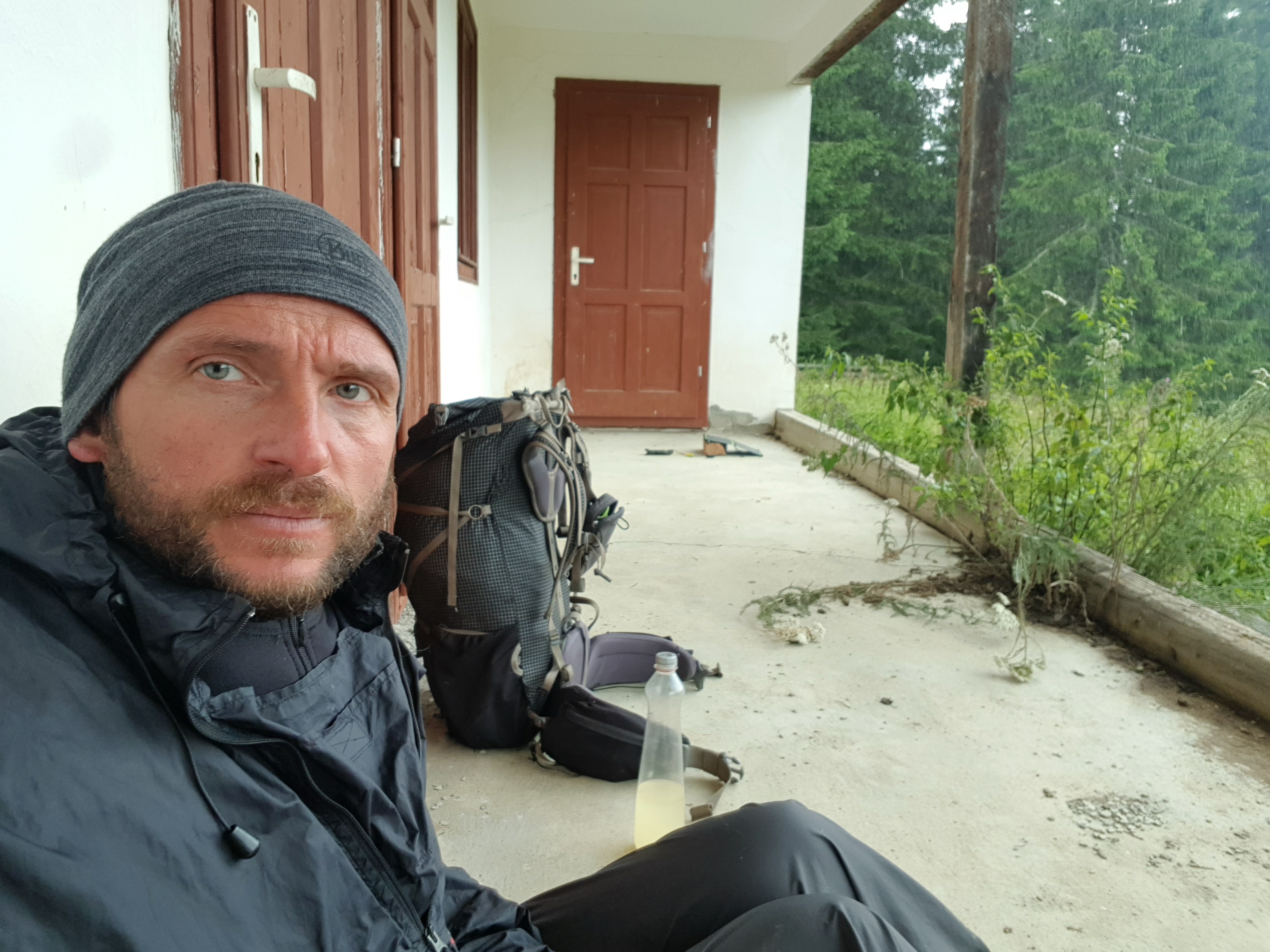
In the Delușor mountain pass (1200 m), I took a lunch break just as the heaviest rain of the day was passing through. It was nice to watch it from the terrace of an abandoned cottage. I continued over Piscul Hergheliei (1412 m) and, in the next pass, came across a newly built, wide forest road. Wow, what a difference!
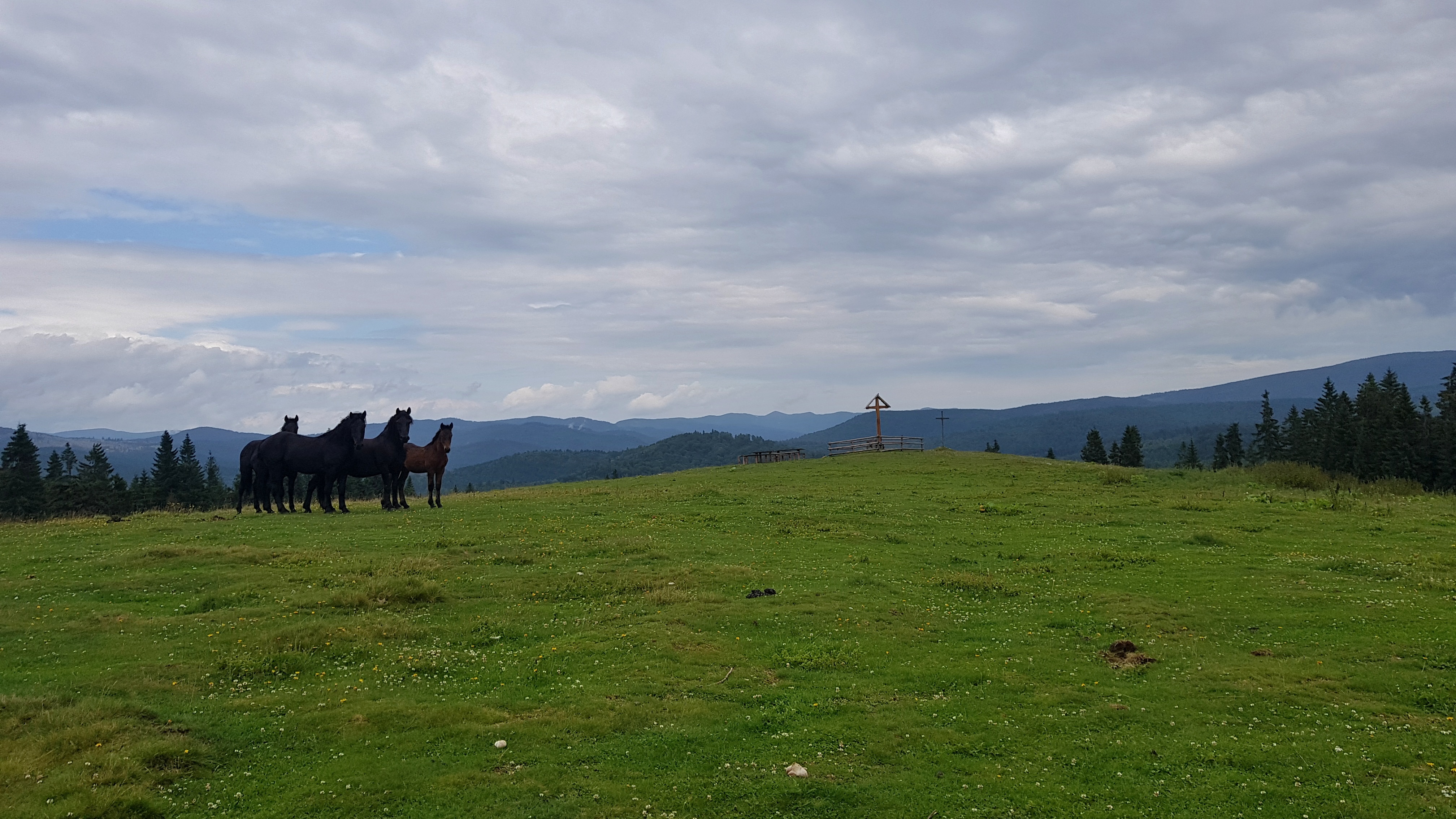
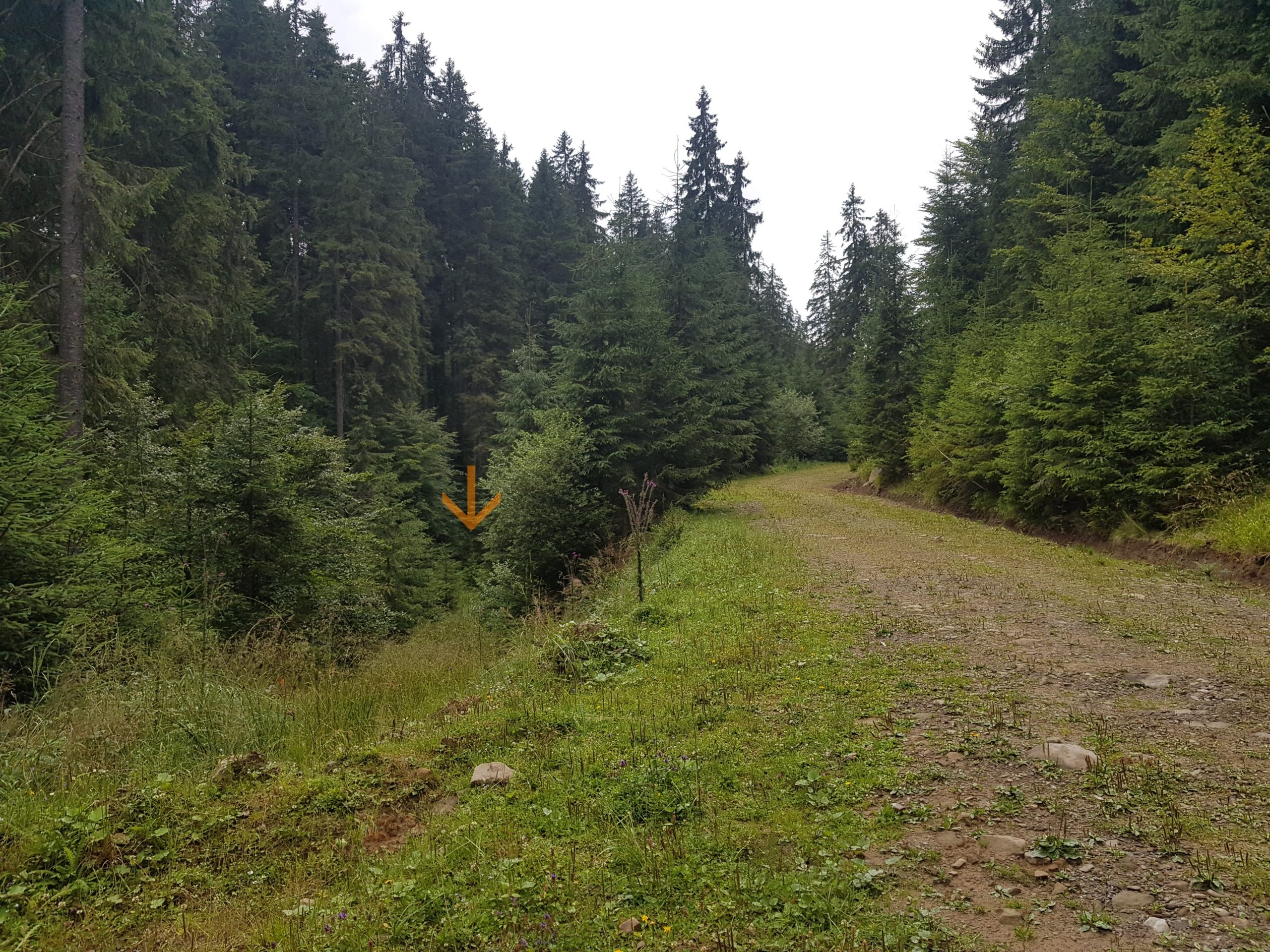
When my planned trail was about to leave this wide road to plunge into what had once been a path but was now buried in high, wet grass, I decided to follow the wide road instead. I preferred to walk a few kilometres further rather than navigating the main ridge. I’ve never been a fan of wide forest roads, but this time was different. Even the sun began to shine through the clouds, adding to my euphoria. I didn’t need to sing loudly because I could see 100 metres ahead of me and could have spotted a bear early enough. There were only a few old bear scats and no fresh tracks anyway. I didn’t have to fight my way through dense vegetation. It was a pure feeling of safety and happiness.
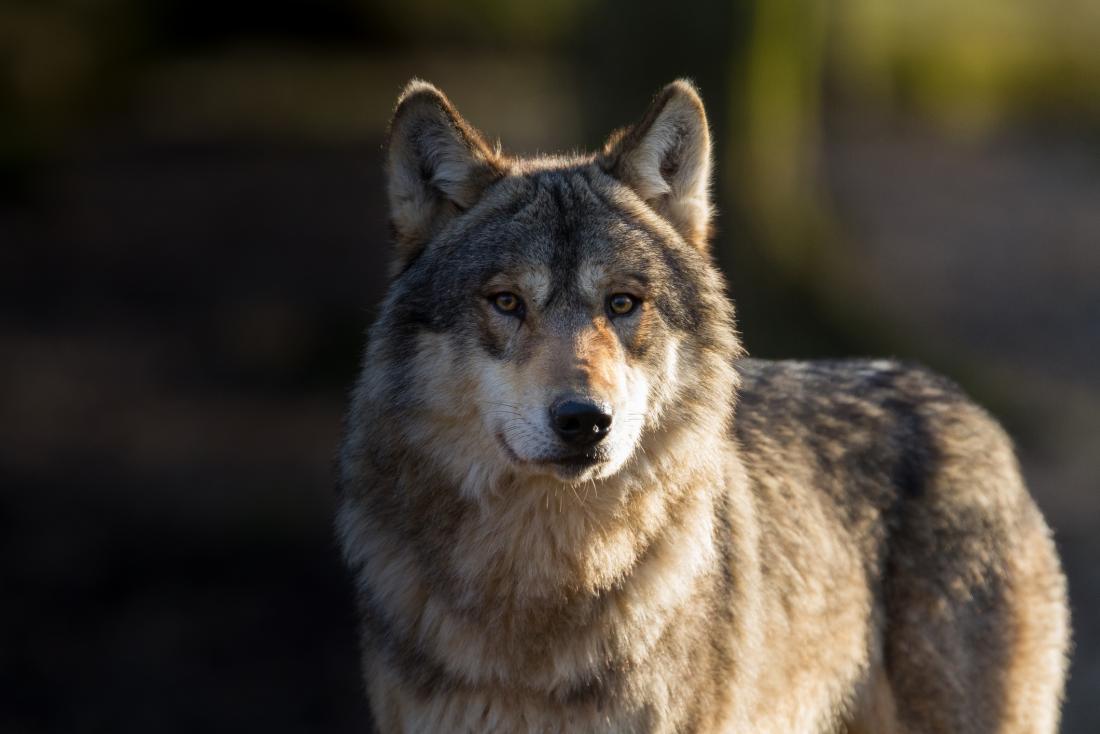
And then, on the slope across a stream about 50 metres away from me, I saw a beautiful head. A wolf and I stood staring at each other for about three seconds. A REAL WOLF, beautifully lit by the evening sun. I tried to pull my smartphone out of its pouch to take a photo, but the wolf turned around and started bounding up the hill. It disappeared into the vegetation before I could even open my camera app.
I continued toward what looked like a local forester’s settlement. The area was clean and beautifully decorated, and the forestry infrastructure matched. All the roads were named, and plentiful picnic areas had been built for visitors—truly impressive. Another rain shower caught me, and I decided to climb back up to the main ridge using another newly built forest road. It even had a signage, just like a real road :-).
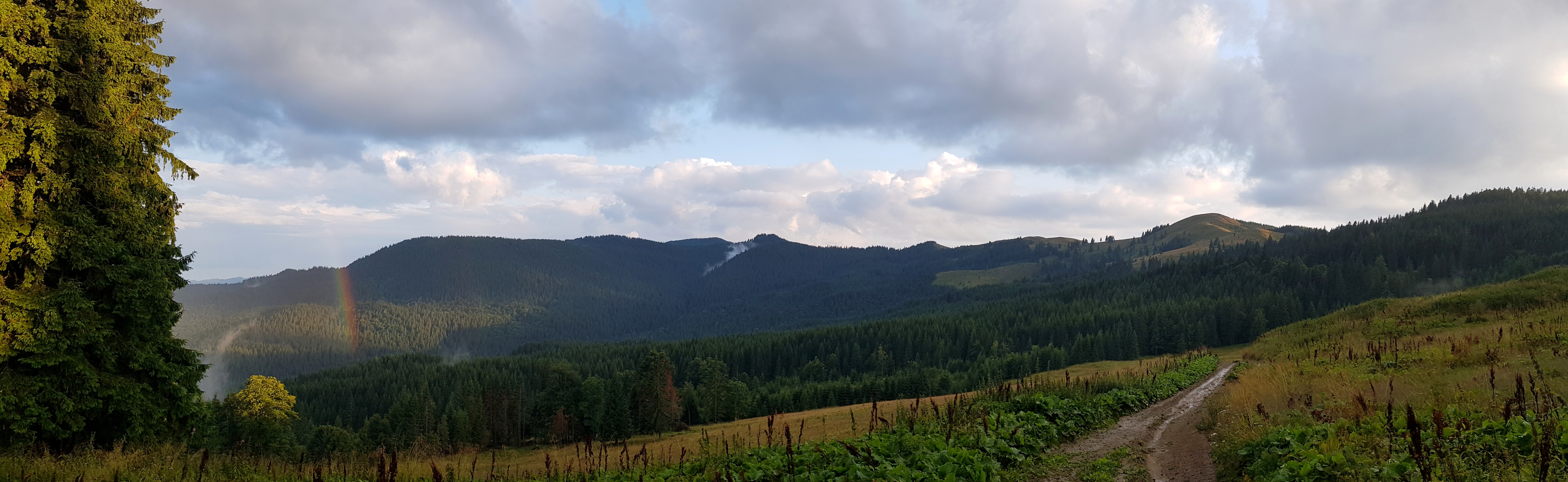
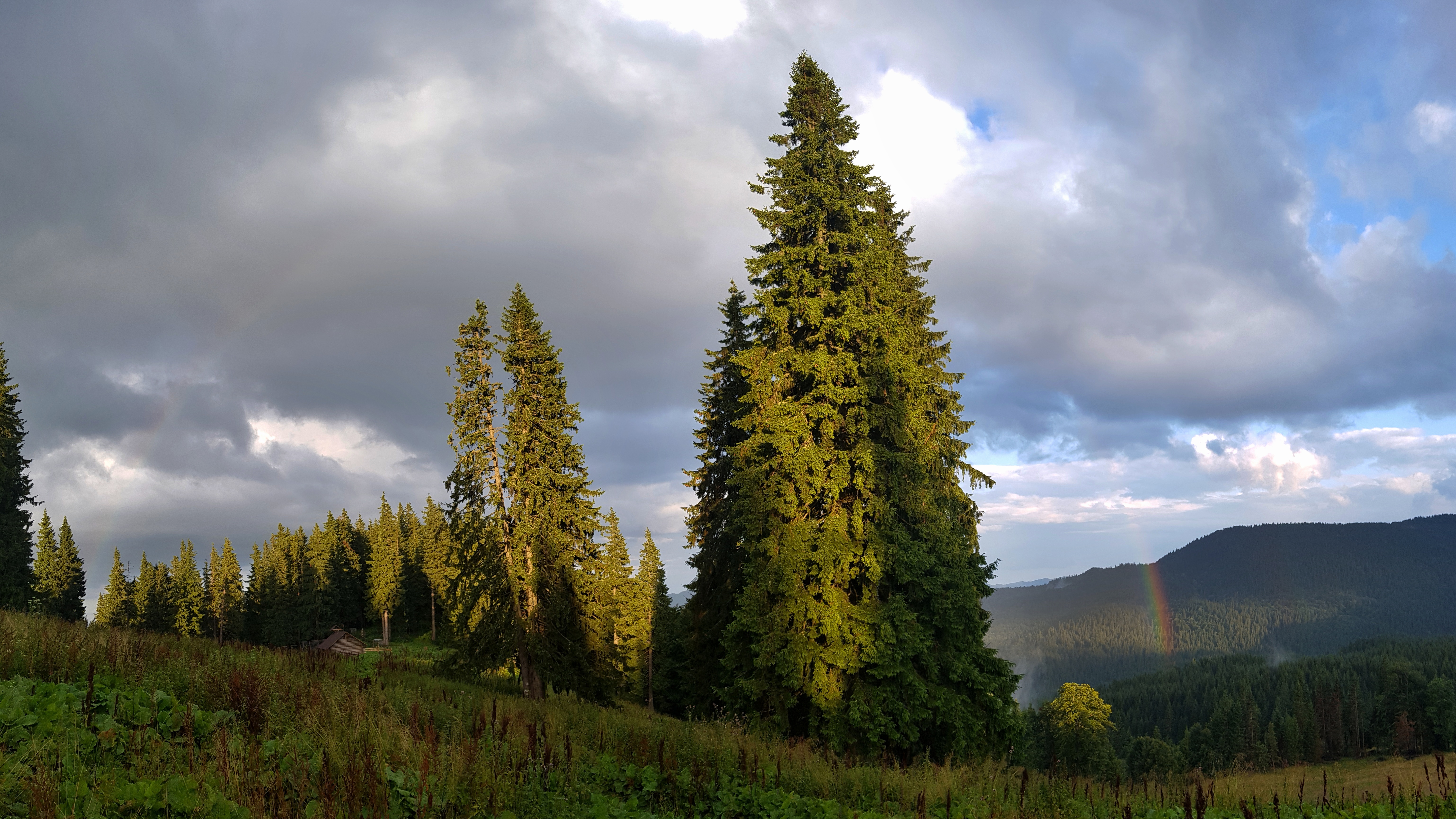
It was around 8 pm when I reached a side ridge, and a stunning view opened up over the Penteleu Mountains. Just as I was filming a short video, another rain shower hit, casting a rainbow to my left… and right there, in the middle of the rainbow on a side ridge, stood a newly built, uninhabited shepherds’ hut (koliba). A miracle. I felt an overwhelming moment of thankfulness for finding a dry place. I soon colonized it, but it was difficult to fall asleep due to the flea bites from the previous days.
One Reply to “A week of loneliness”
Comments are closed.